I have spent a fair amount of time thinking about what happens to the human body and mind under extreme conditions. But here is something I had not fully considered… when astronauts arrive in space after a lifetime on Earth, their brains still think gravity is there. And that turns out to matter rather a lot.
A new study from researchers at the Université catholique de Louvain in Belgium has explored exactly how astronauts adapt their grip and movement when transitioning between Earth and space and what they found reveals something profound about the way our brains work.
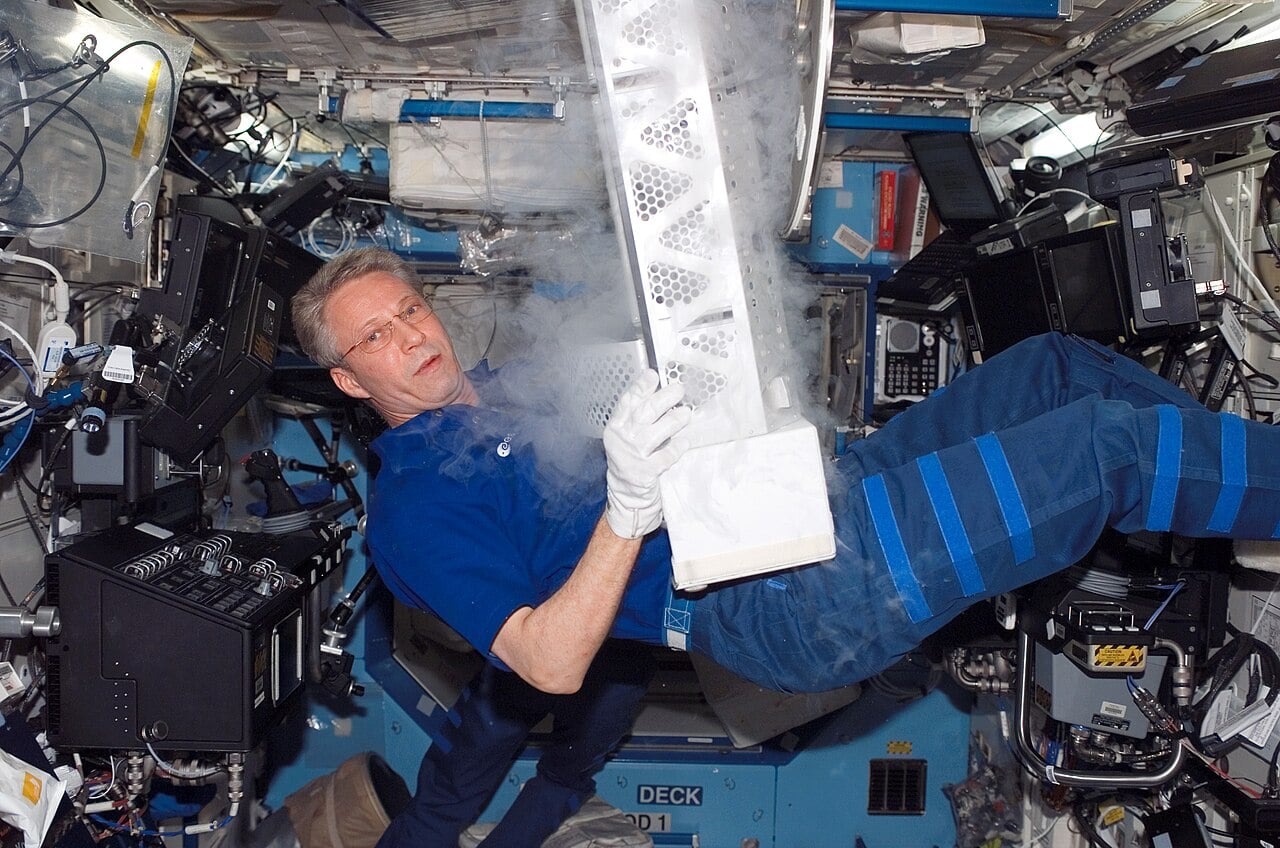
On Earth, gripping an object is second nature. We squeeze just hard enough to stop things falling, and our brains handle the whole calculation automatically, compensating for gravity without us ever giving it a conscious thought. In space, the rules change entirely. Let go of a stationary object and it simply stays where it is, floating. But move it, and inertia takes over so it will drift in whatever direction the motion carries it unless you maintain a steady grip. The physics are completely different, and the brain has to learn all over again.
What the researchers found is that it does not learn quickly. When astronauts first arrive in space, they overcompensate, gripping objects far more firmly than necessary, because their brains are still anticipating gravity's pull. Decades of experience on Earth have left a deep imprint, and that imprint does not simply switch off the moment weightlessness kicks in. Particularly when moving objects around, rather than just holding them still, astronauts were initially making predictions based on a gravitational world that no longer existed around them.
The effect works in reverse too. When astronauts return to Earth after months in orbit, they initially get it wrong again, underestimating how much grip they need, because their brains have by then adapted to weightlessness. The adjustment back to normal gravity takes time.
What makes this research especially interesting is what it tells us about how the brain manages risk. Rather than simply reacting to mistakes as they happen, the brain is constantly making predictions about what might go wrong and adjusting grip strength accordingly. It is a forward looking system, not a reactive one and when the fundamental rules of the physical environment change, those predictions take time to catch up.
The work spanned nearly twenty years from initial planning to final analysis, a reminder that the most valuable science is rarely the quickest. As we plan longer missions to the Moon and beyond, understanding exactly how astronauts' bodies and minds adapt to, and recover from weightlessness will matter more than ever.
Source : How do astronauts adapt when transitioning between Earth and outer space?