
Every now and then, a star dies in the most spectacular way imaginable. It detonates and in a matter of seconds, it outshines its entire host galaxy before fading back into darkness over the following weeks. These explosions, known as Type Ia supernovae, are some of the most violent events in the universe. They're also one of astronomy's most powerful measuring tools.
Type Ia supernovae all explode with roughly the same intrinsic brightness. That makes them what astronomers call standard candles, if you know how bright something actually is and you can measure how bright it appears, you can calculate exactly how far away it is. It's the same principle as knowing a lighthouse emits a fixed amount of light and using its apparent dimness to judge your distance from the shore.
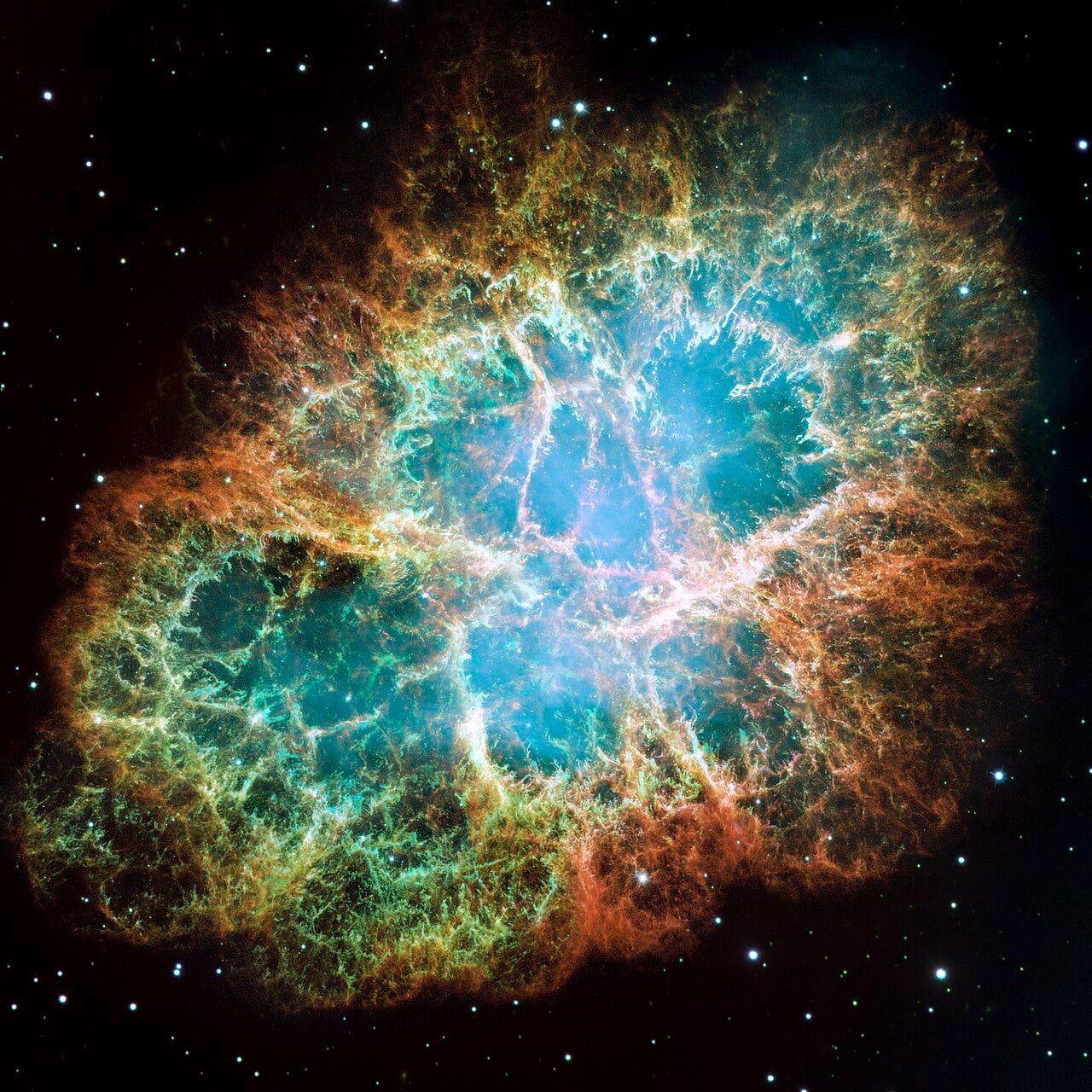 The Crab Nebula captured by the Hubble Space Telescope (Credit : NASA/ESA)
The problem is that the light reaching us from supernovae explosions isn't clean. It's been filtered through clouds of interstellar dust, shaped by the age and chemical composition of the star that exploded, and influenced by the galaxy it lived in. Separating these effects has always required detailed analysis of exactly how light is spread across different wavelengths.
The Vera Rubin Observatory in Chile, which has just begun operations, is expected to discover over 100,000 Type Ia supernovae every single year. Traditional methods simply cannot keep up. Until now, astronomers have had to rely on spectroscopic data from perhaps 1 per cent of observed supernovae, effectively discarding 99 per cent of what they detect.
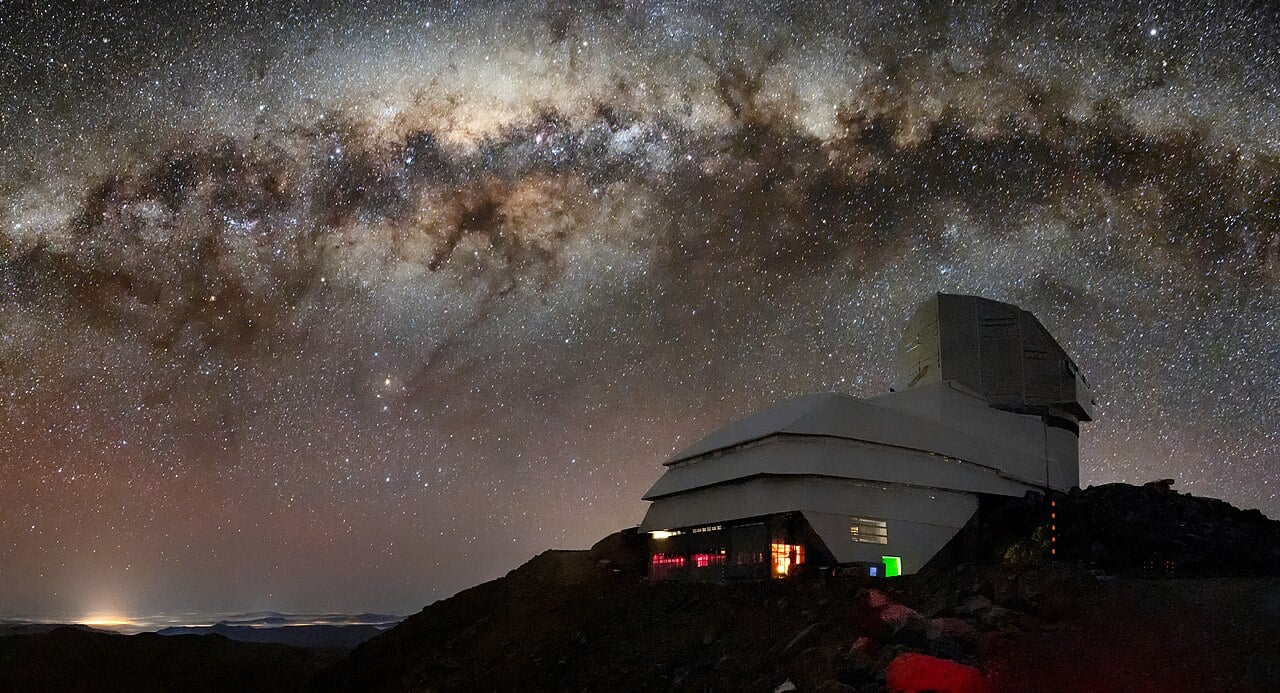 The Vera Rubin Observatory against the Milky Way (Credit : Rubin Observatory)
A team from SISSA in Trieste and the University of Barcelona has changed that. Their new method, called CIGaRS, uses artificial intelligence and neural networks to disentangle all the competing influences on a supernova's brightness simultaneously, using photometric data alone. It combines galaxy evolution, dust effects, stellar age and chemical composition into a single unified model rather than correcting for each factor separately in a chain of approximations.
It has been tested on simulated catalogues of up to 16,000 supernovae which is roughly what Vera Rubin will collect in a single month. CIGaRS achieved cosmological measurements four times more precise than methods dependent on that small spectroscopic fraction.
In practical terms, that means using all the data rather than a tiny slice of it. And in cosmology, where the difference between competing theories of dark energy can hinge on tiny variations in measurement, four times the precision isn't just an improvement, it could be the difference between an answer and a guess.
Source : From supernova light a sharper view of the universe
