
Imagine a world where the Sun never rises and never sets! It feels like that here in the UK sometimes with what feels like a never-ending cover of cloud. On one side of a world like this, a permanent blazing day whilst on the other, an endless frozen night. No seasons, no dawn, no dusk just an eternal, pitiless divide. For more than three quarters of the stars in our Galaxy, this is the reality facing their planets. And now, for the first time, astronomers have mapped the climate of two such worlds in extraordinary detail.
The targets are TRAPPIST-1b and TRAPPIST-1c, the two innermost planets of the remarkable TRAPPIST-1 system, which celebrates its tenth anniversary of discovery this year. Orbiting a red dwarf star just 40 light years away, this seven planet system has long been a focal point for scientists hunting for life beyond Earth. Red dwarfs are small and cool compared to our Sun, but they are by far the most common type of star in the Galaxy. Whether their planets could support life is therefore one of the most important questions in all of astronomy.
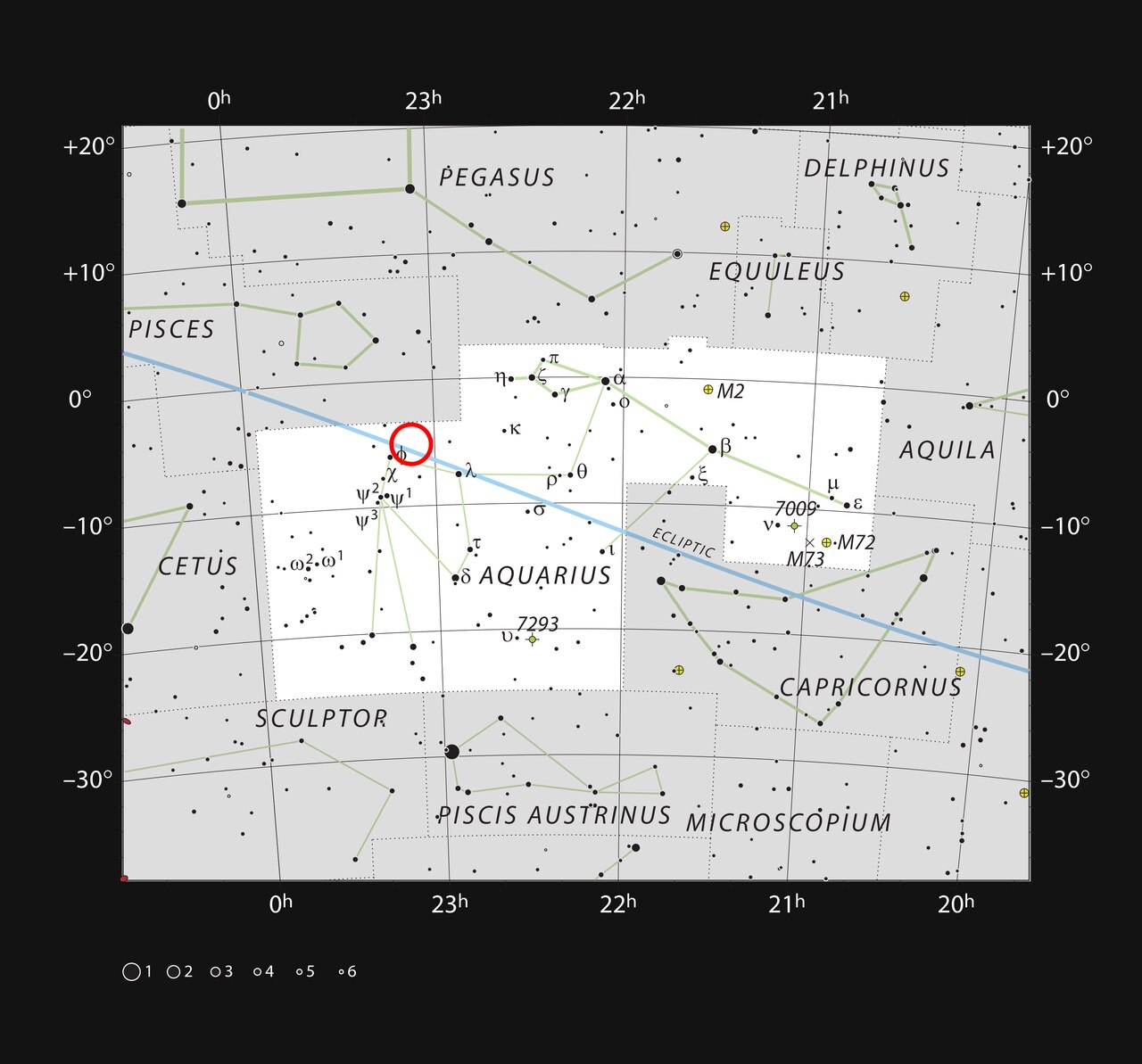 This chart shows the naked eye stars visible on a clear dark night in the constellation of Aquarius with the position of the Trappist-1 system (Credit : ESO/IAU and Sky & Telescope)
Like our Moon orbiting Earth, these planets are tidally locked, gravity has synchronised their rotation so that the same face always points towards their star. The dramatic consequence of this is that there is no gentle cycle of day and night to moderate temperatures, no winds carrying warmth from one hemisphere to another unless, of course, there is an atmosphere to do the job.
Using the James Webb Space Telescope, an international team from the Universities of Geneva and Bern tracked both planets continuously in infrared light across a full orbit, totalling 60 hours of unbroken observation. By measuring exactly how much heat each planet radiates on its day and night sides, they were able to construct the first temperature maps ever made of Earth sized worlds around another star.
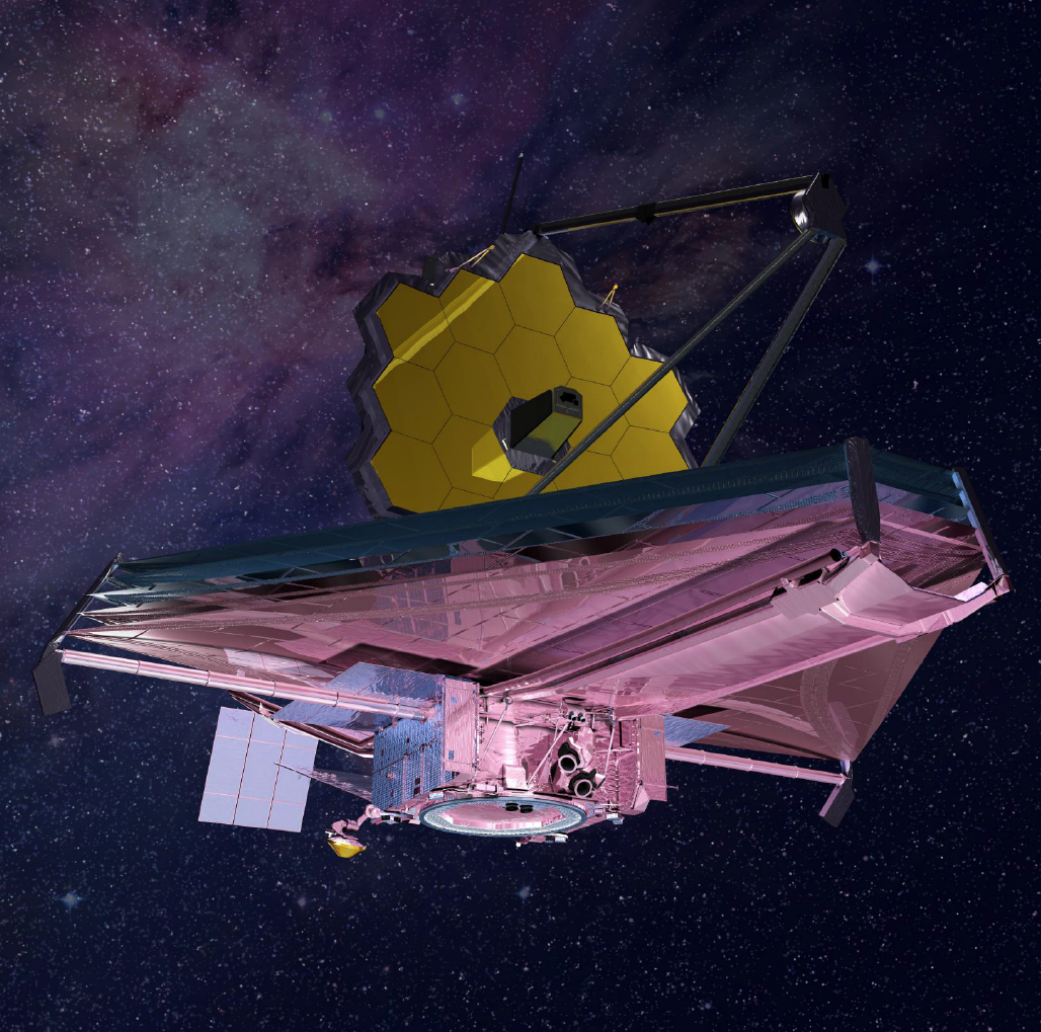 Artist impression of the James Webb Space Telescope (Credit : NASA)
TRAPPIST-1b reaches dayside temperatures above 200 degrees Celsius, while its night side plummets below minus 200 and TRAPPIST-1c tells a similar story. These are not just extreme temperatures, they are a death sentence for the hopes and dreams of there being an atmosphere. If air were present, it would carry heat from the scorching day side to the frozen night side, smoothing out the contrast. Instead the divide is enormous, pointing firmly to bare, airless rock.
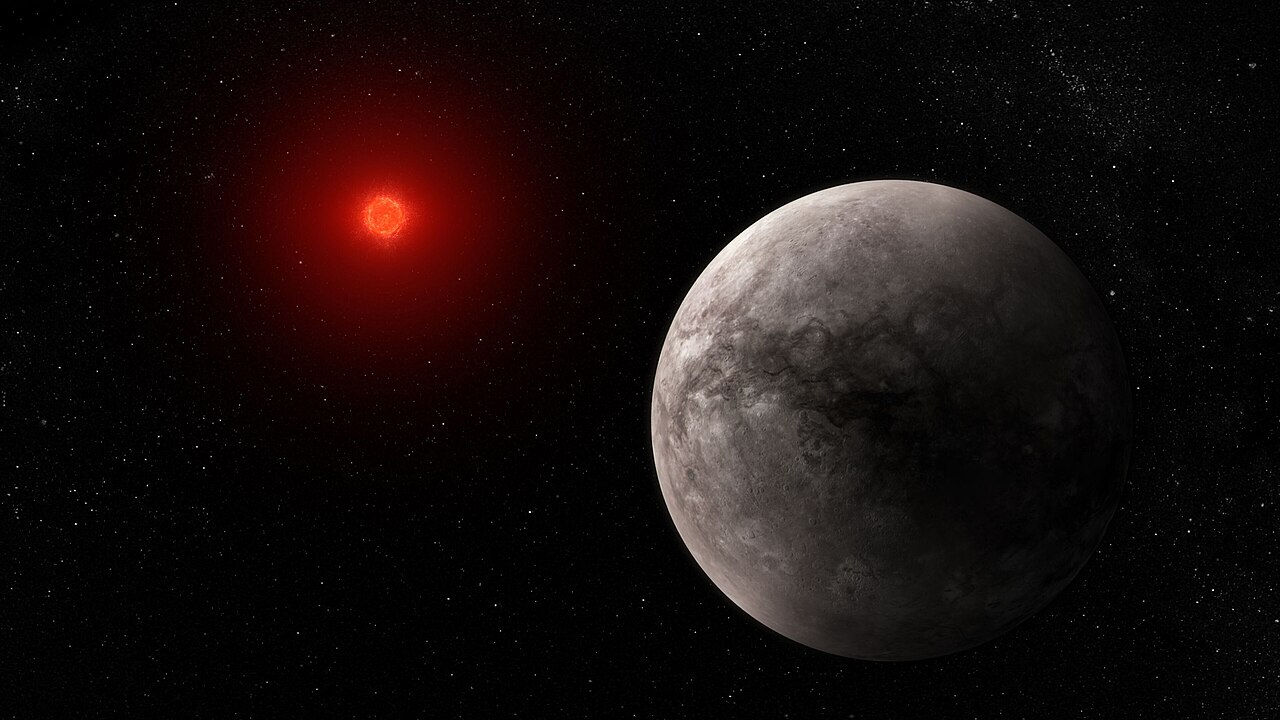 Artist's impression of TRAPPIST-1b (Credit : NASA, ESA, CSA, J. Olmsted)
The culprit appears to be the star itself. Red dwarfs are ferociously active, bombarding their closest planets with ultraviolet radiation and charged particles that strip away atmospheres over millions of years. For TRAPPIST-1b and 1c, that process appears to be complete.
But the story is far from over since three of the system's other planets sit in the habitable zone, where liquid water could exist on the surface. Webb is already observing TRAPPIST-1e, one of those more distant worlds, and the team are optimistic. Just as Mercury has no atmosphere while Venus and Earth do, distance from the star may make all the difference.
Source : Between Eternal Night and Day, the Faces of Two Cousins of Earth
