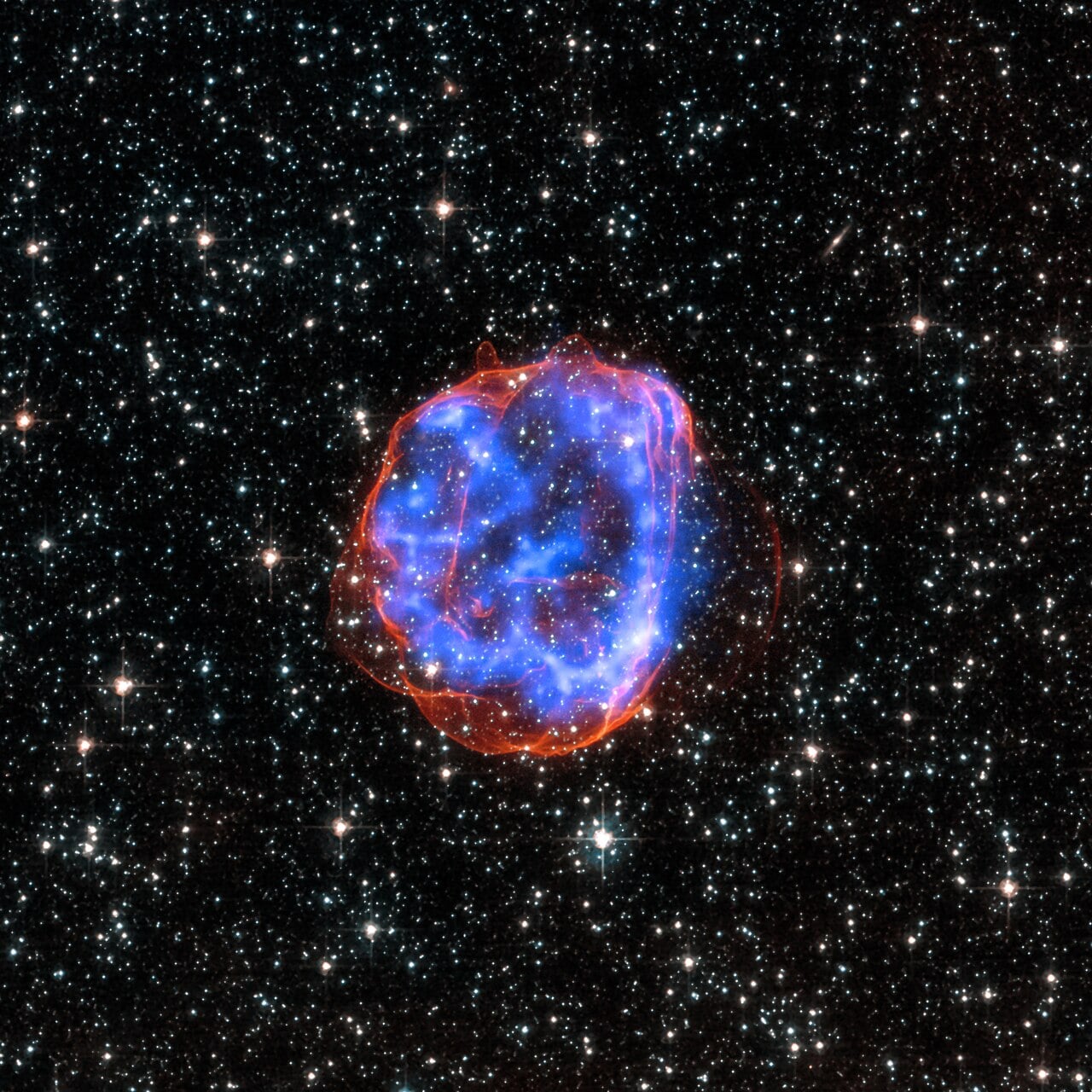
When a massive star reaches the end of its life, it collapses. The cessation of the outward pushing force from fusion means gravity finally wins and the collapse begins. If it's heavy enough, nothing can stop that collapse, not pressure, not heat, not any force in nature. The result is a black hole, a point of infinite density wrapped in a boundary from which not even light escapes. It's one of the most dramatic endings in the universe. But for the biggest black holes, that story turns out to be wrong. Or at least incomplete.
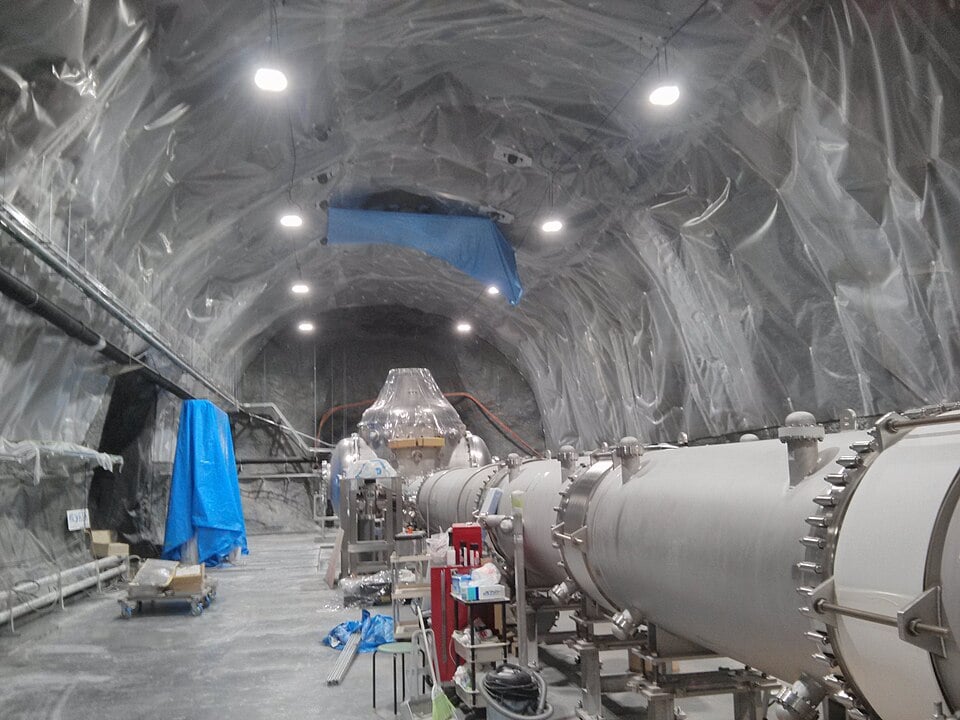
A new study led by Cardiff University and published in Nature Astronomy has analysed 153 black hole mergers detected by the LIGO, Virgo and KAGRA gravitational wave observatories. It’s the most comprehensive catalogue of its kind and, buried in the data is a clear signal: the most massive black holes weren't created in a single stellar collapse. They were assembled, piece by piece, through a series of repeated and extraordinarily violent collisions. The clue it seems is in the spin.
When two black holes merge, the resulting object inherits a spin influenced by both its parents. If black holes are forming directly from dying stars and merging in pairs, their spins tend to be slow and aligned. But in the Cardiff data, the heaviest black holes tell a different story entirely. Some had rapid spins, pointing in seemingly random directions. That’s the signature of objects that have been through multiple mergers, tumbling through space and colliding again and again in environments of almost unimaginable density.
Those environments are globular star clusters, ancient, tightly packed balls of hundreds of thousands of stars. In their cores, stars can be crammed up to a million times more densely than in our own galactic neighbourhood. Black holes that form there don't drift apart. They interact, collide, merge, and grow. Each generation heavier than the last.
"The biggest black holes in the current sample seem to be telling us about cluster dynamics, not just stellar evolution," - Dr Fabio Antonini, lead author from Cardiff University.
The study also confirms something theorists have long predicted but struggled to prove, that there’s a mass gap. Very massive stars, it turns out, don't collapse into black holes at all, instead they detonate, torn apart by their own runaway energy before a black hole can form. This creates a forbidden zone, a range of masses that stellar black holes simply shouldn't occupy. The Cardiff team pinpoints this boundary at around 45 times the mass of our Sun. Above that threshold, the rules change. The spin patterns shift and the black holes look like second or third generation objects, the products of cluster dynamics rather than stellar death.