There is a place at the centre of our Galaxy where the rules of physics are pushed to their limits. Squeezed into a region smaller than our Solar System sits Sagittarius A*, a supermassive black hole four million times the mass of our Sun. The space around it is a churning and chaotic environment where stars orbit at breakneck speeds, gas swirls through intense gravitational fields, and anything straying too close risks being torn apart and consumed. Yet for all its violence, one of the biggest mysteries here has been surprisingly simple; what on earth (pardon the pun) is feeding it?
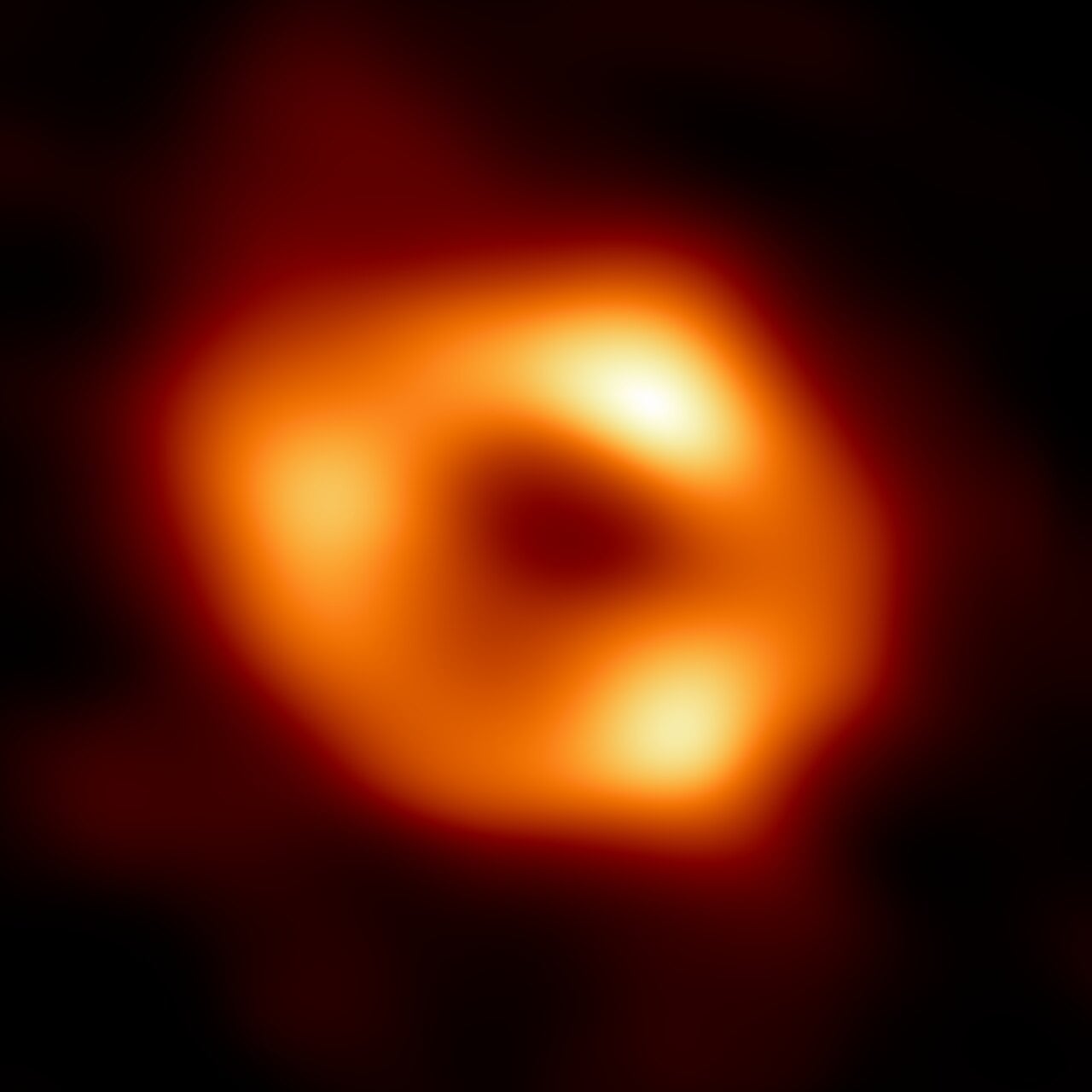
Part of the answer may lie with a strange family of gas clouds spotted lurking near Sagittarius A* over the past two decades. Known as G1, G2, and G2t, these compact clumps of ionised gas each carry roughly the mass of a few Earths. They glow in infrared light, radiating energy from hot hydrogen and helium as they travel on long, looping orbits around the black hole. What makes them so intriguing is that all three trace almost identical paths, a coincidence so unlikely that they must share a common origin. But what created them?
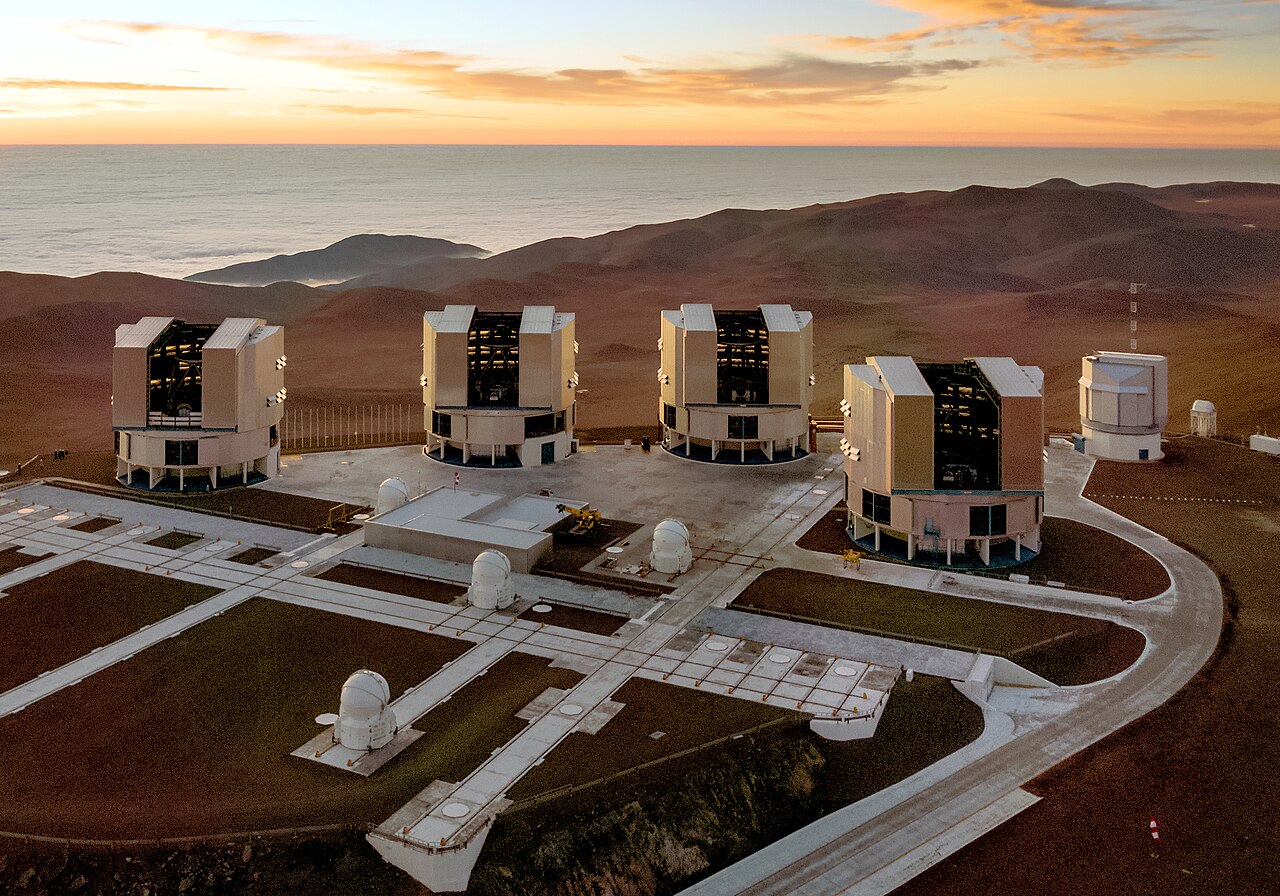
A team led by researchers at the Max Planck Institute for Extraterrestrial Physics has now traced the clouds back to their source using some of the sharpest infrared eyes on the planet. Combining observations from the SINFONI and ERIS spectrographs on ESO's Very Large Telescope, they reconstructed the precise orbits of all three clouds from their positions and velocities. They confirmed what was suspected, that the chance of three unrelated objects sharing such specific orbital parameters is vanishingly small.
Following those orbits backwards in time pointed the team towards IRS 16SW, a massive contact binary star system sitting in the clockwise ring of young stars that orbits Sagittarius A*. Contact binaries are extraordinary objects and comprise of two giant stars so close together they actually touch, sharing material in a continuous, turbulent exchange. The stellar winds pouring from such a system are ferocious, and when they slam into the surrounding gas, the collision creates a shock. Computer simulations confirm that this shock compresses gas into dense clumps which then detach and drift inward producing precisely the kind of objects astronomers have been watching for two decades.
Each clump carries roughly one Earth mass of material, and calculations suggest the infall of just one such cloud every decade could sustain Sagittarius A*'s current level of activity. In other words, a pair of stars locked in an embrace may be quietly, steadily fuelling the monster at the heart of our Galaxy. As telescopes grow ever more powerful, astronomers expect to find more such streamers, each one another thread connecting the lives of stars to the appetite of the black hole at our Galaxy's core.
Source : Tracing the Origins of Mysterious Gas Clouds near the Galactic Center