In our own Solar System, the gas giants sit far from the Sun; Jupiter is five times further out than Earth, Saturn nearly ten. For a long time, astronomers assumed that was simply how planetary systems worked. Then we started finding planets around other stars, and some of them broke every rule. Hot Jupiters are gas giants similar in size to Jupiter but orbiting their stars at a fraction of the distance, some completing a full orbit in just a few days. Temperatures on their surfaces can reach thousands of degrees. They are exotic, extreme, and until recently, deeply puzzling.
These hot gas giants are the bullies of their planetary system. They sit almost on top of their parent stars, blisteringly hot and gravitationally dominant. Anything smaller that dares share their neighbourhood gets scattered into oblivion. Which is why, when astronomers discovered a mini Neptune quietly orbiting inside one in 2020, they were somewhat baffled.
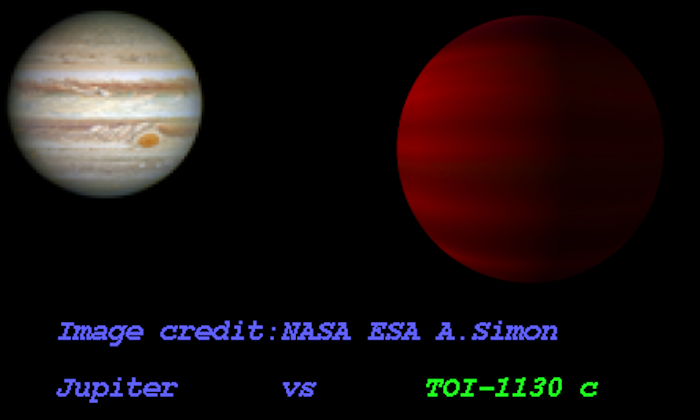
The system is called TOI-1130 and it sits 190 light years from Earth. The hot Jupiter; TOI-1130c, circles its star every eight days. The mini Neptune (TOI-1130b) orbits even closer in, completing a lap every four days. By rights, that smaller planet should have been destroyed long ago. It wasn't. And nobody could explain why. Now an MIT led team has used NASA's James Webb Space Telescope to peer into the mini Neptune's atmosphere and the chemistry they found tells the origin story of the entire system.
"Hot Jupiters are lonely. They are so massive, and their gravity is so strong, that whatever is inside their orbit just gets scattered away. But somehow, with this hot Jupiter, an inner companion has survived.” - Chelsea Huang, lead researcher from MIT
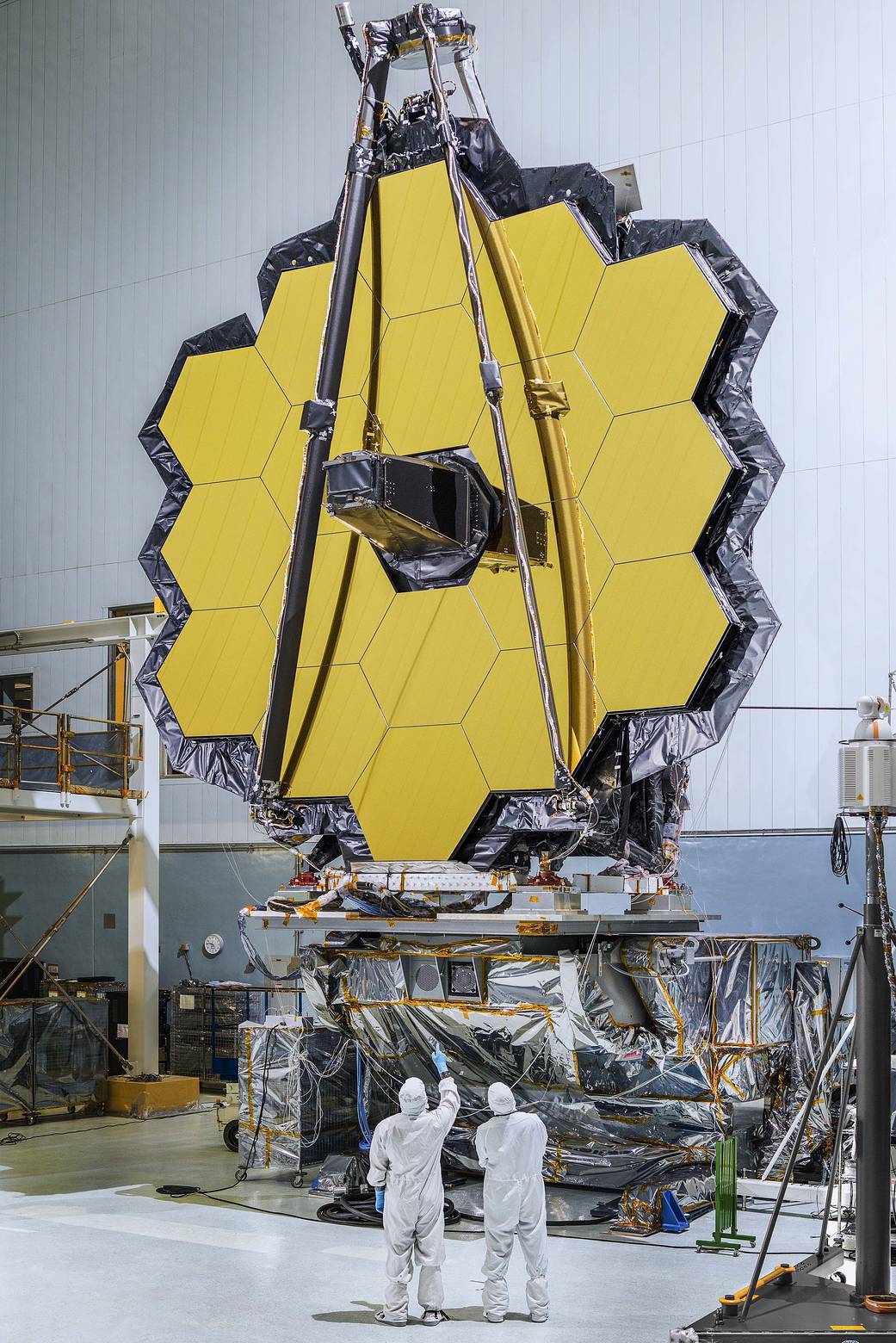
Enter the James Webb Space Telescope into the story. It doesn’t just collect light, it reads it. As a planet crosses in front of its star, different molecules in its atmosphere absorb specific wavelengths, leaving gaps in the starlight like a chemical fingerprint. For TOI-1130b, those gaps revealed water vapour, carbon dioxide, sulphur dioxide, and a hint of methane. These are heavy, volatile rich molecules, precisely the kind a planet accumulates when it forms beyond its star's frostline.
The frostline is the boundary in a young solar system beyond which temperatures drop low enough for water vapour to freeze onto dust grains. Out there, in the cold, young planets can sweep up vast quantities of icy material and incorporate it into their growing atmospheres. The chemical signature JWST detected in TOI-1130b is exactly what you'd expect from a planet that spent its early life in that frigid outer region.
The picture that emerges is this, both planets formed far from their star, beyond the frostline, over roughly ten million years. Then, locked in a gravitational partnership, their orbits in a precise 2:1 ratio, one completing two laps for every one of the other’s, they migrated inward together. Not chaotically, not violently, but slowly, driven by interactions with the disc of material surrounding their young star. The mini Neptune survived because it moved in step with its giant companion rather than against it.
Even getting JWST to confirm this was a challenge. The two planets pull on each other gravitationally, making their transits unpredictable, sometimes running as much as five hours early or late. Catching the mini Neptune crossing its star at exactly the right moment required years of follow up observations and painstaking timing models.
It was worth it since this is the first time astronomers have measured the atmosphere of a mini Neptune inside a hot Jupiter's orbit, and it confirms that migration can produce some of the universe's stranger planetary configurations. Our own Solar System, with its neat arrangement of rocky inner planets and gas giants further out, suddenly looks less like a rule and more like one possibility among many.
Source : Astronomers pin down the origins of a planetary odd couple