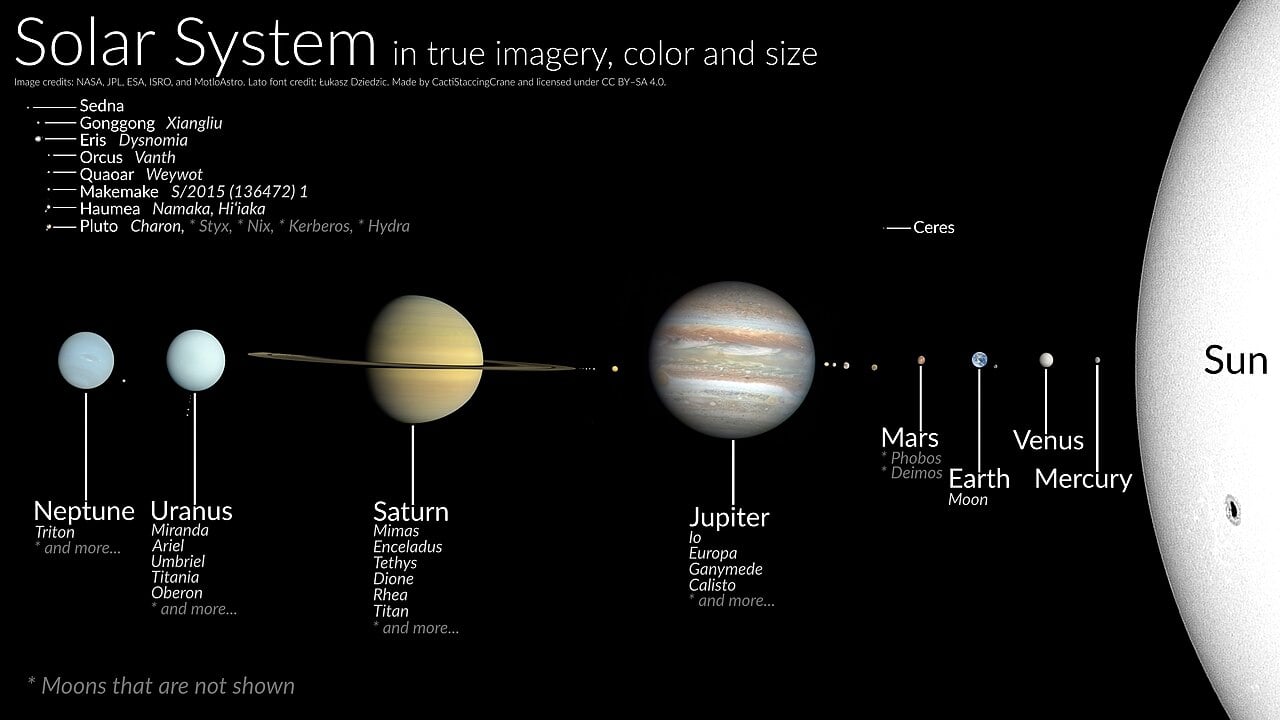
Our Solar System, it turns out, is something of an oddball. While we have rocky planets close to the Sun and gas giants further out, most stars in the Milky Way harbour something entirely different. They are worlds between the sizes of Earth and Neptune and orbit closer to their stars than Mercury does to ours. These super Earths and sub Neptunes are the Galaxy’s most common planets, found around nearly every Sun like star ever have studied. Until now that is.
An international team of astronomers has found what they’re calling a crucial missing link, a young planetary system caught in the act of becoming the Galaxy’s most common architecture. Like the famous Lucy fossil that helped bridge apes and humans, this system shows us exactly how the universe builds its favourite type of planet.
The key lies in V1298 Tau, a young star just 20 million years old, barely a toddler compared to our 4.5 billion year old Sun. Four giant planets circle this star, each between the sizes of Neptune and Jupiter, engaged in what researchers describe as a turbulent phase of rapid evolution. Over the next few billion years, these bloated worlds will shrink dramatically, transforming into the compact super Earths and sub Neptunes that populate our Galaxy.
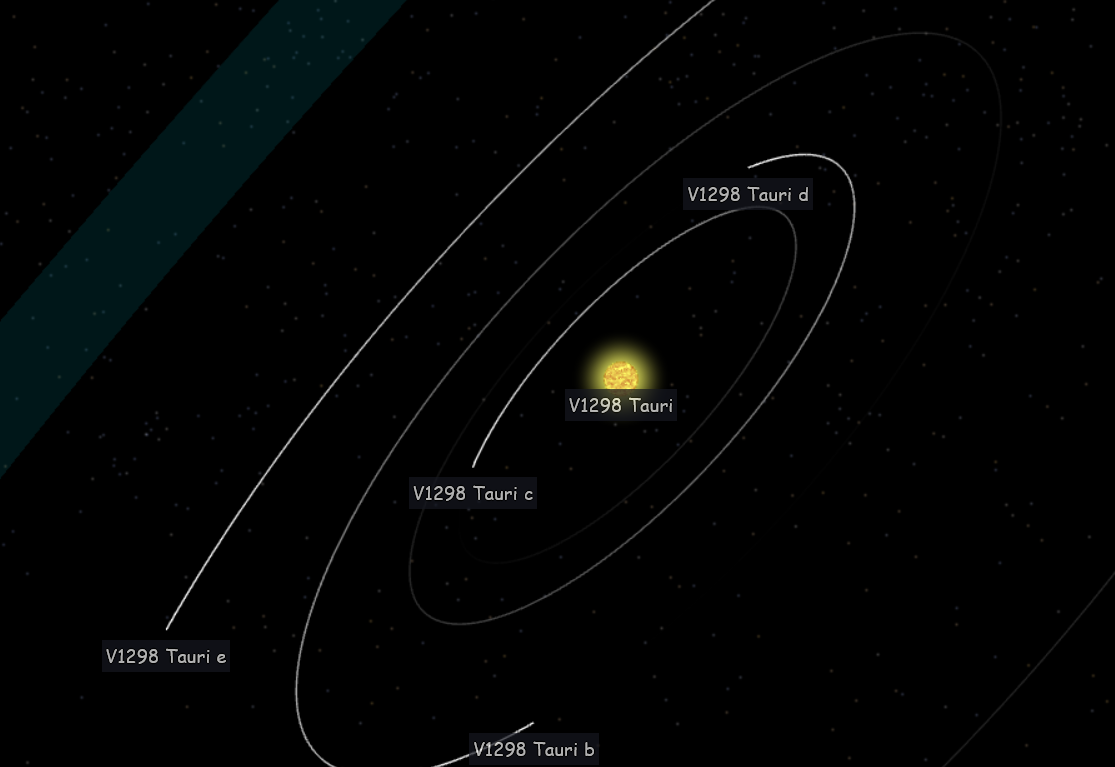
The team spent a decade measuring when each planet crossed in front of its star in an event known as a transit. But they weren’t just looking at the transits themselves, they were timing tiny irregularities. The planets’ gravitational tugs on each other cause subtle shifts in their orbital dance, speeding up or slowing down by mere minutes. These Transit Timing Variations allowed the researchers to weigh the planets for the first time, sidestepping the usual method which fails spectacularly with young, temperamental stars.
The results surprised even the researchers. Despite being 5 to 10 times Earth’s radius, the planets weighed only 5 to 15 times our world’s mass. They’re extraordinarily low density, more like planetary sized cotton candy than anything we’d recognise as a proper planet.
This puffiness solves a long-standing puzzle. Standard planet formation models predict that newly formed worlds should be far more compact. The analysis reveals that these planets underwent dramatic transformation early on, rapidly shedding much of their initial atmospheres when the gas rich disk around their young star disappeared. But they’re still evolving. Over billions of years, they’ll continue losing atmosphere and contracting significantly.
“We’re essentially watching the universe’s most successful planetary architecture in the making” - John Livingston, lead author from Tokyo’s Astrobiology Centre.
This discovery might also explain why our own Solar System lacks the Galaxy’s most common planets, perhaps we simply evolved differently, taking a less-travelled cosmic path.
Source : Astronomers find missing link to galaxy's most common planets