The universe was supposed to take its time building the largest structures in existence. Galaxy clusters, containing hundreds or thousands of individual galaxies bound together by gravity and immersed in enormous pools of superheated gas, should require billions of years to assemble. Standard models predict these monsters couldn’t possibly form in the universe’s early childhood.
Perhaps JADES-ID1 just didn’t get the memo.
A new discovery published in Nature reveals the object that is classified as a protocluster, a galaxy cluster caught in its violent early formation phase already assembling just one billion years after the Big Bang. That’s one or two billion years earlier than theory suggested such structures could exist, creating a puzzle that challenges our understanding of how the universe evolved.
“This may be the most distant confirmed protocluster ever seen/ JADES-ID1 is giving us new evidence that the universe was in a huge hurry to grow up ” - Akos Bogdan of the Centre for Astrophysics | Harvard & Smithsonian.
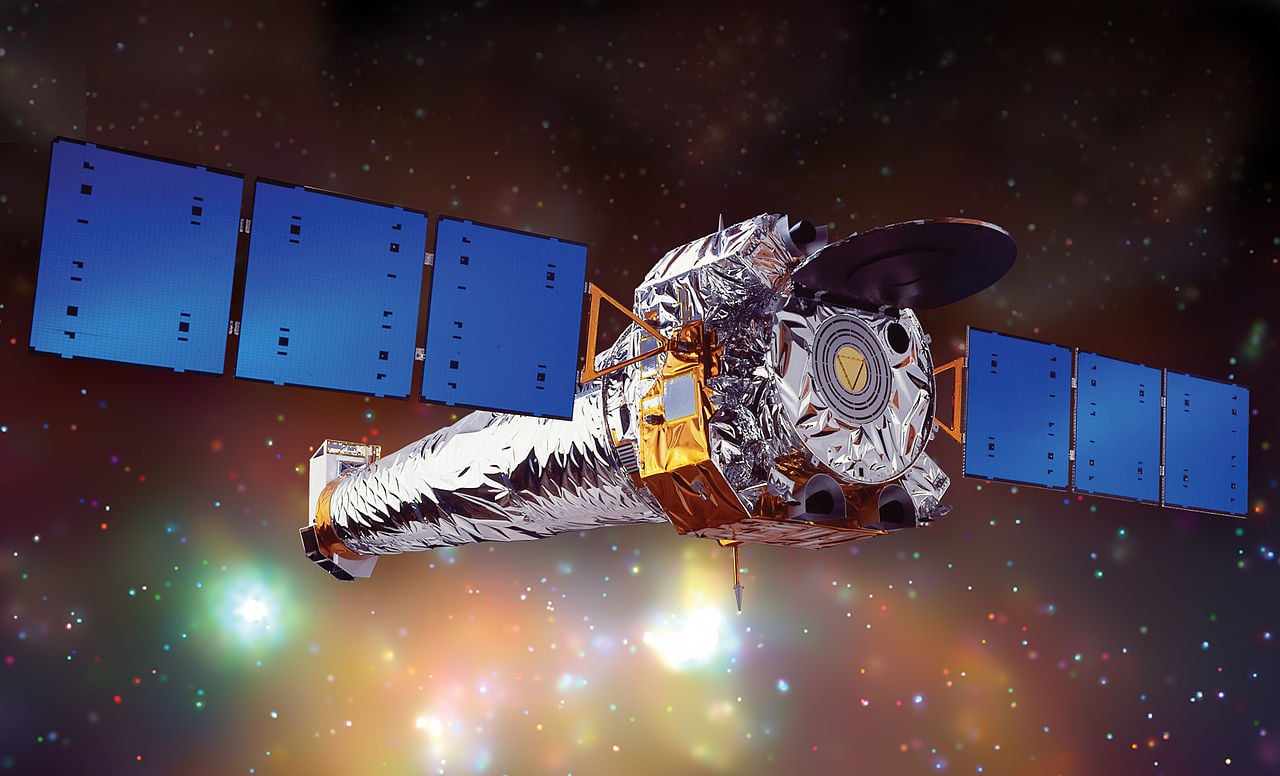
The discovery came from combining observations by two of NASA’s most powerful telescopes. The James Webb Space Telescope identified at least 66 galaxies clustered together at this astonishing distance, while the Chandra X-ray Observatory detected a vast cloud of million degree gas enveloping those galaxies. That hot gas is the telltale signature of cluster formation in action. As galaxies fall together under gravity, gas plunges inward and gets violently compressed, heating to temperatures that make it glow in X-rays. It’s direct evidence that JADES-ID1 isn’t just a chance alignment of galaxies but a genuine protocluster held together by gravity.
“It’s very important to actually see when and how galaxy clusters grow. It’s like watching an assembly line make a car, rather than just trying to figure out how a car works by looking at the finished product.” - Gerrit Schellenberger Co-author from the Centre for Astrophysics.
What makes this discovery extraordinary is the timing. JADES-ID1 has already accumulated mass about 20 trillion times that of the Sun, an enormous assembly of matter in what should be a very young universe. The previous record holder for a protocluster with X-ray emission existed much later, about three billion years after the Big Bang giving gravity considerably more time to do its work.
Most models of cosmic structure formation predict there simply wouldn’t be enough time or a high enough density of galaxies for something this massive to coalesce only a billion years after creation. Yet here it is, defying expectations.
The discovery was only possible because of a fortunate overlap. The James Webb Advanced Deep Extragalactic Survey field happens to align with the Chandra Deep Field South, site of the deepest X-ray observation ever conducted. This combination gave astronomers the rare ability to see both the galaxies themselves and the hot gas binding them together at such extreme distances. Over billions of years, JADES-ID1 will continue evolving, eventually becoming a massive galaxy cluster like those astronomers observe in the local universe. But its formation demands new explanations for how gravity could work so efficiently in the early universe, potentially revealing physics we haven’t yet considered about how the universe’s grandest structures came into being.
Source : NASA Telescopes Spot Surprisingly Mature Cluster in Early Universe