Deep in the frozen heart of Antarctica, the South Pole Telescope has been watching one of the most extreme neighbourhoods in our Galaxy, and it's just caught something extraordinary happening there. Astronomers have detected powerful stellar flares erupting from stars near the supermassive black hole at the centre of the Milky Way. These aren't your average stellar flares, we're talking about energy releases so intense they make our Sun's most dramatic outbursts look like flickering candles.
Galactic centre is a wild place. Twenty six thousand light years away, in the constellation Sagittarius, four million solar masses of black hole gravity churns through space while stars hurtle around it at breakneck speeds. It's crowded, violent, and until now, remarkably difficult to study in certain wavelengths of light.
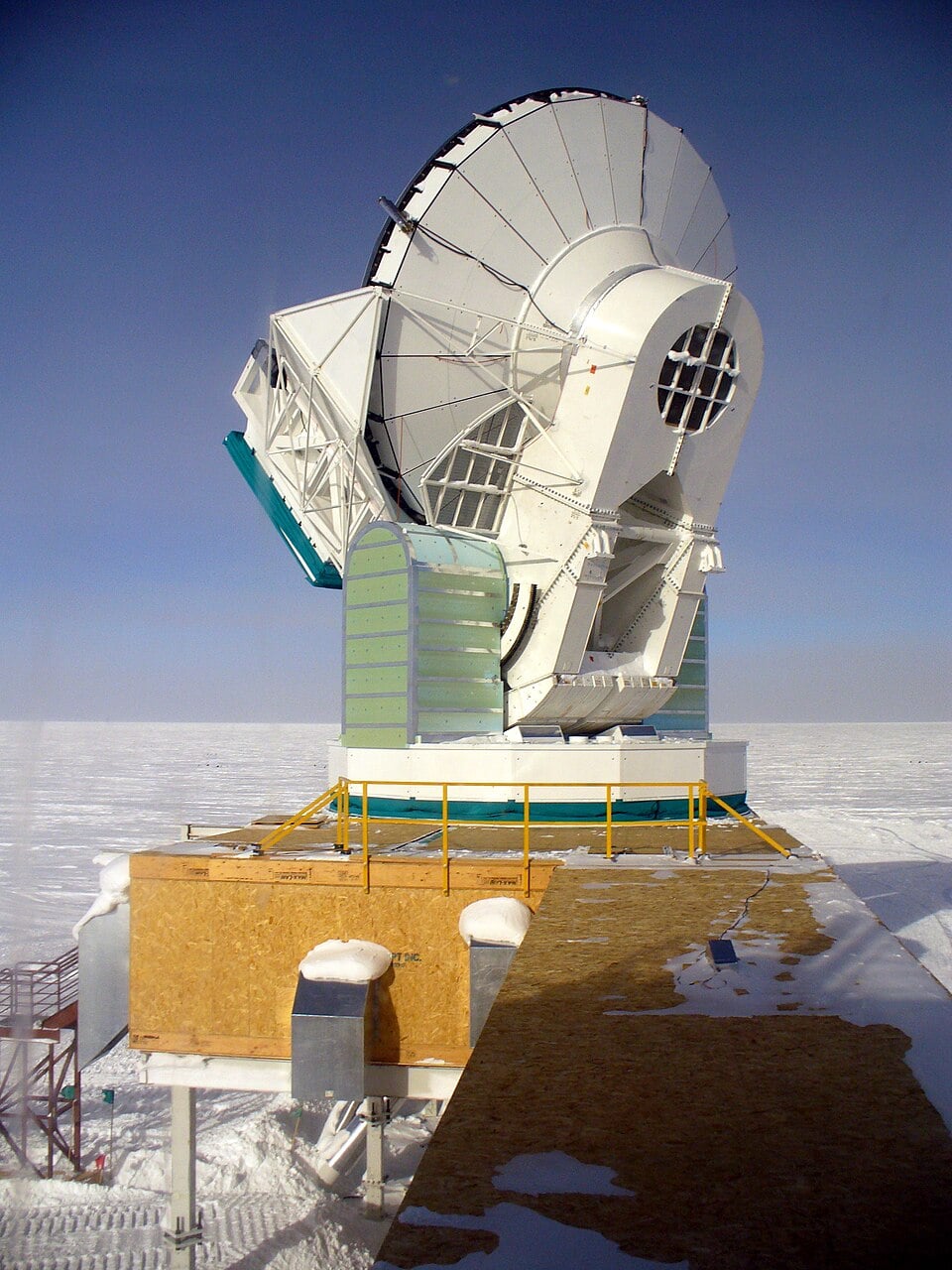
That's where the South Pole Telescope comes in. Operating at millimetre wavelengths, sitting between infrared and radio waves on the electromagnetic spectrum, it can peer through the dust that obscures our view of the galactic core. The bone dry Antarctic air and stable atmosphere make the South Pole an ideal location for this kind of observation.
The research team, led by scientists at the University of Illinois Urbana-Champaign and the National Center for Supercomputing Applications, monitored the galactic centre over multiple observing seasons. They were looking for transient events such as flashes that appear and disappear relatively quickly.
What they found were stellar flares; sudden, dramatic brightenings caused by magnetic reconnection events in stellar atmospheres. When tangled magnetic field lines snap and reconnect, they release enormous amounts of energy as radiation. On our Sun, such flares can disrupt satellites and power grids on Earth but near the centre of the Galaxy, the flares are far more energetic.
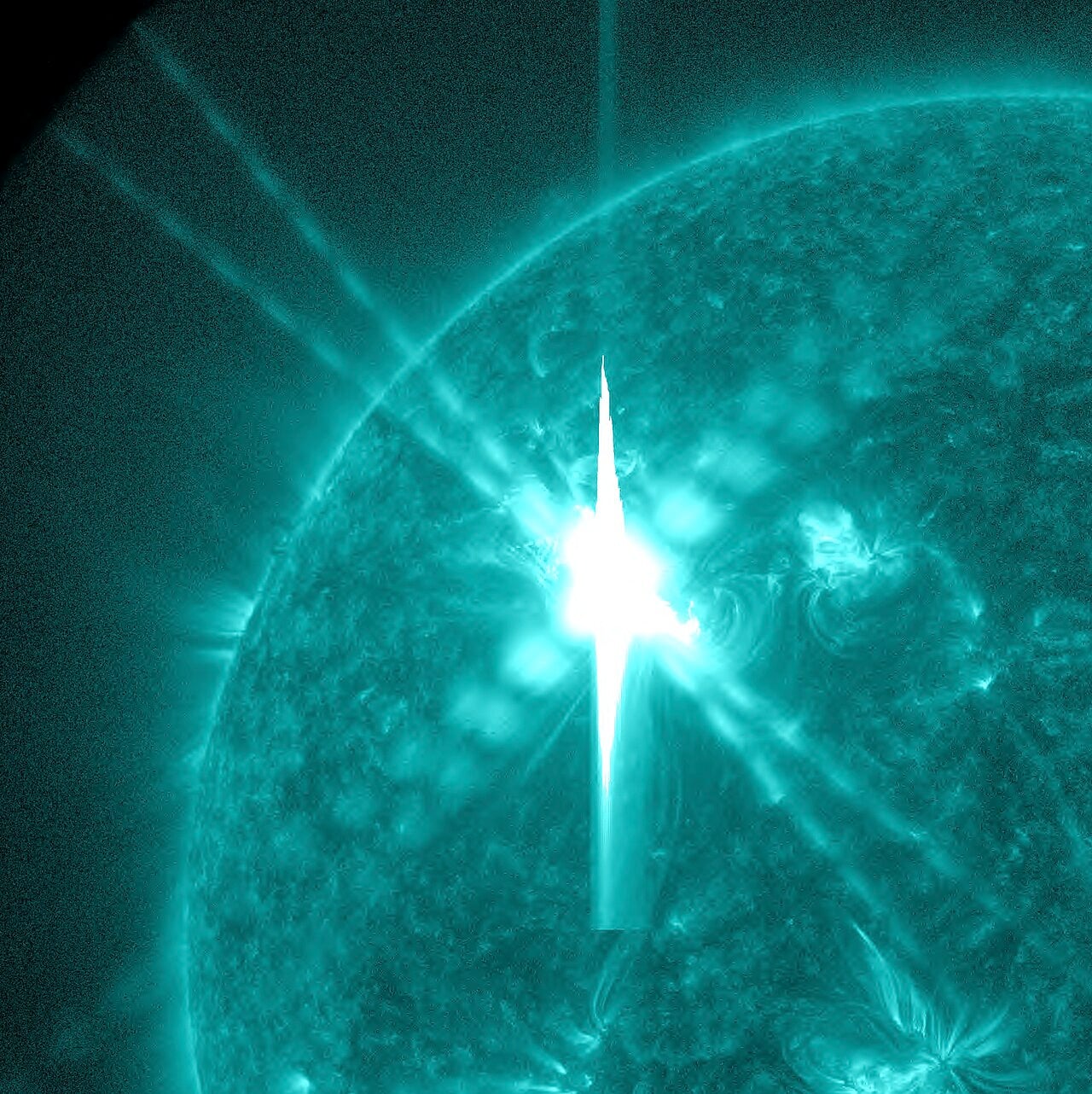
The detection is significant for several reasons. First, it demonstrates that millimetre wavelength observations can catch these transient events, opening a new window for studying stellar activity in dust obscured regions. Second, it provides insight into the population of stars surviving in one of the most extreme environments in our Galaxy.
Stars near supermassive black holes face intense tidal forces, harsh radiation environments, and frequent close encounters with other stars. Understanding which stars can survive there, and how they behave helps astronomers piece together the evolution of galactic centres and the exotic physics at work in these regions. The flares also serve as probes of the magnetic fields and atmospheric conditions of stars we can barely observe through other means. Each outburst is like a brief lighthouse flash, illuminating stellar properties that would otherwise remain hidden behind galactic dust.
Future observations with the South Pole Telescope and other facilities could reveal whether these flares follow patterns, how common they are among different types of stars, and what they tell us about magnetic activity in extreme gravitational environments. As we develop better tools for monitoring transient events across different wavelengths, the centre of our Galaxy is becoming less mysterious, one stellar flare at a time.