If humans are ever going to expand into space itself, it will have to be for a reason. Optimists think that reason is simply due to our love of exploration itself. But in history, it is more often a profit motive that has led humans to seek out new lands. So, it stands to reason that, in order for us to truly begin space colonization, we will have to have a business-related reason to do so. A new paper from the lab of Srivatsan Raman at the University of Wisconsin-Madison and recently published in PLOS Biology, describes one potential such business case - genetically modifying bacteriophages to attack antibiotic resistant bacteria.
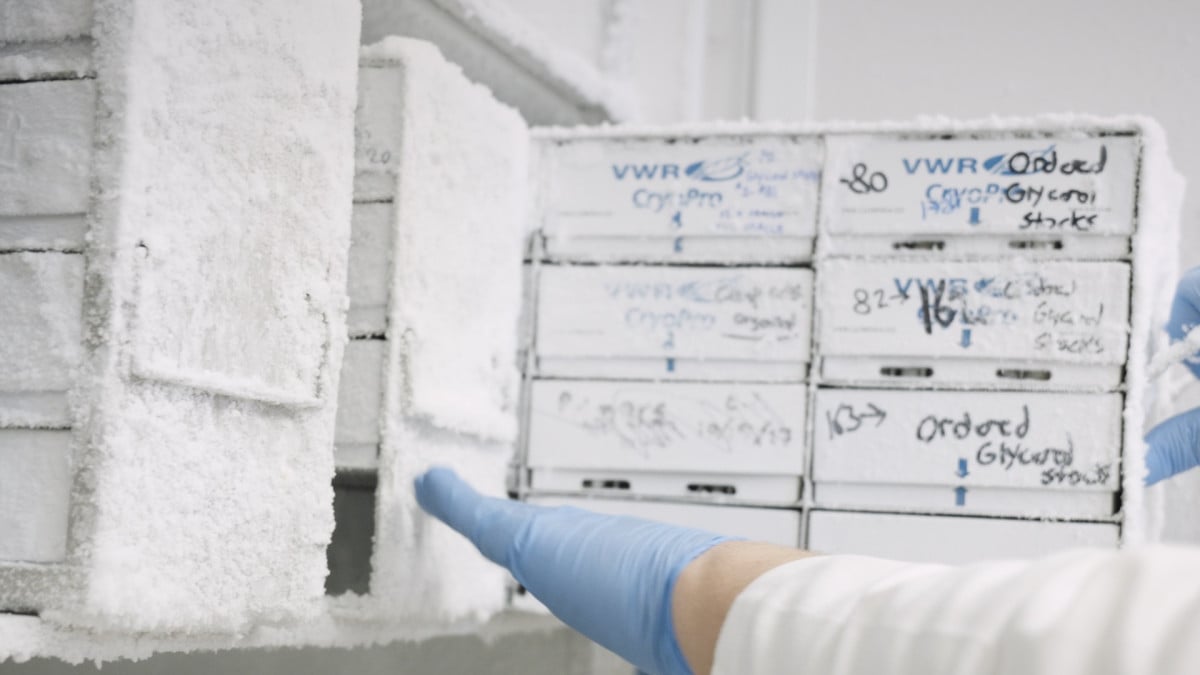
Using the harsh environment of space as a testbed for genetic modifications isn’t a new idea. However, this paper does represent one of the first times it's ever been demonstrated in practice. The original experiment was launched in September 2020, with the help of Rhodium Scientific, a biotech company that helps facilitate research on the International Space Station. Their specialized cryovials were designed to prevent leaks and maintain a storage temperature of -80℃ during launch.
Even before the experiment was sent up to orbit, though, the lab had plenty of work to do. They selected a “library” of 1,660 different pre-modified phage variants, with the intention of watching which won the "survival of the fittest” contest in space. This was much more straightforward than simply waiting for random mutations to happen from the space environment itself, even with its increased level of radiation.
YouTube video describing the experiment. Credit - UW-Madison Department of BiochemistryAs a control, they also maintained the same combination of phages and bacteria on Earth, to compare the results of their evolutionary dance between the more normal Earth environment and that of microgravity. At first, there was one noticeable difference - it took much longer for the space bacteriophages to wipe out their bacteria counterparts. Earth-bound bacteriophages made short work of them, taking around 2-4 hours to kill the bacteria, while the phages in space showed no signs of increased activity.
This was likely due to microgravity itself - in this environment, there was no convection, or movement of solution under any outside force like temperature or pressure differentials. The phages had to rely on diffusion, which is a much slower process, to get to their targets. But those targets weren’t exactly “standing still” either.
In space, the E. coli bacteria that was used in this experiment is under immense stress. That same lack of convection that caused the slow movement of phages caused waste to build up directly around the bacterial cells. In addition, nutrients, which would normally be swept their way by convection, weren’t as easy to come by. To adapt to this, the bacteria made their own mutations.
Specifically, they modified a gene called mlaA, which is responsible for be responsible for shuttling around phospholipids into the inner part of the membrane. In space, this gene was mutated to cause the phospholipids to flip to the surface. Since the surface is where bacteriophages interact with bacteria, this required a change in their plan of attack as well.
On Earth, the phages that “won” the competition exhibited standard evolutionary changes like developing positively charged tips to grab onto the negatively charged bacteria. But in space, the phages that won developed hydrophobic substitutions inside the Receptor Binding Protein they use to attach to bacteria. According to the paper, this likely made the tail fiber either more flexible, or more stable, and allowed the phages to attach to the “weird” membranes of the bacteria that flipped their phospholipids to the outside.
Perhaps more curiously, when the newly mutated phages were brought back to Earth, they were found to be particularly good at killing bacteria that are responsible for urinary tract infections, one of the most common types of infections in the world, and one that has a very high level of antibiotic resistance. Notably, the variants that remained on Earth were not able to defeat the “super bugs” of the antibiotic resistant UTI bacteria.
While this might seem counterintuitive, the researchers believe that the stress the bacteria experience in the human urinary tract, such as chemical stresses and nutrient limitation, somehow mimics the environment their space-born counterparts were subject to. Therefore, they developed the same evolutionary edges, and were weak to the same plan of attack the phages in space came up with.
Kurzgesagt explains why bacteriophages are the deadliest being on the planet. Credit - Kurzgesagt YouTube ChannelThat is very promising from a business standpoint - if we can somehow develop a way to use a bioreactor in space to come up with superphages that can kill antibiotic-resistant bacteria back on Earth, that would be a multi-billion dollar industry. But these are still early days, and a lot of work would have to be done before any such system would really take off. And to do so at scale would require a facility much bigger than the ISS.
It remains to be seen if this will be one of the “killer apps” that really lets commercial spaceflight take off. But if nothing else it is an interesting nuance of how the evolutionary dance of two long-time enemies changes in different environments. Hopefully, someday, we’ll be able to use those changes to benefit large parts of humanity.
Learn More:
UW Madison - Microbes mutated in space hint at biomedical benefits to humans on Earth
P Huss et al. - Microgravity reshapes bacteriophage–host coevolution aboard the International Space Station