In the fields of science and science communication, there are few things more controversial than claims regarding the discovery of extraterrestrial life. This includes claims ranging from the discovery of the most basic lifeforms (lichens, single-celled organisms, etc.) to evidence of advanced civilizations. Such claims are incredibly common, thanks to the sensationalism surrounding the Search for Extraterrestrial Intelligence (SETI) and the search for life beyond Earth (astrobiology). Even when scientists have avoided issuing declarative judgments, it is very easy for statements to be twisted and misrepresented.
In a recent paper, a team specializing in SETI and astrobiology presented four case studies involving controversial claims made since the late 19th century. These include claims of there being civilizations on Mars, life in Venus' cloudtops, and the 2020 detection of a candidate signal by the largest SETI project to date, Breakthrough Listen. After examining the discovery process for each case and how they were received, they identified lessons and possible strategies that scientists and science communicators can use to address future claims of astrobiological discoveries.
The research was conducted by Daliah Bibas, a Doctoral Scholar specializing in the Philosophy of Extraterrestrial and Artificial Intelligence at Vrije Universiteit Brussel and Dr. Clément Vidal, a researcher from Vrije Universiteit Brussel, the co-founder of the non-profit Evo Devo Institute, an author, and a former visiting scholar at UC Berkeley's SETI Research Center. Their paper, "Responsible Discovery in Astrobiology: Lessons from four controversial claims," recently appeared online and will be published in the upcoming volume, “Responsibility in Space,” by the Academy of International Affairs NRW (AIA NRW).
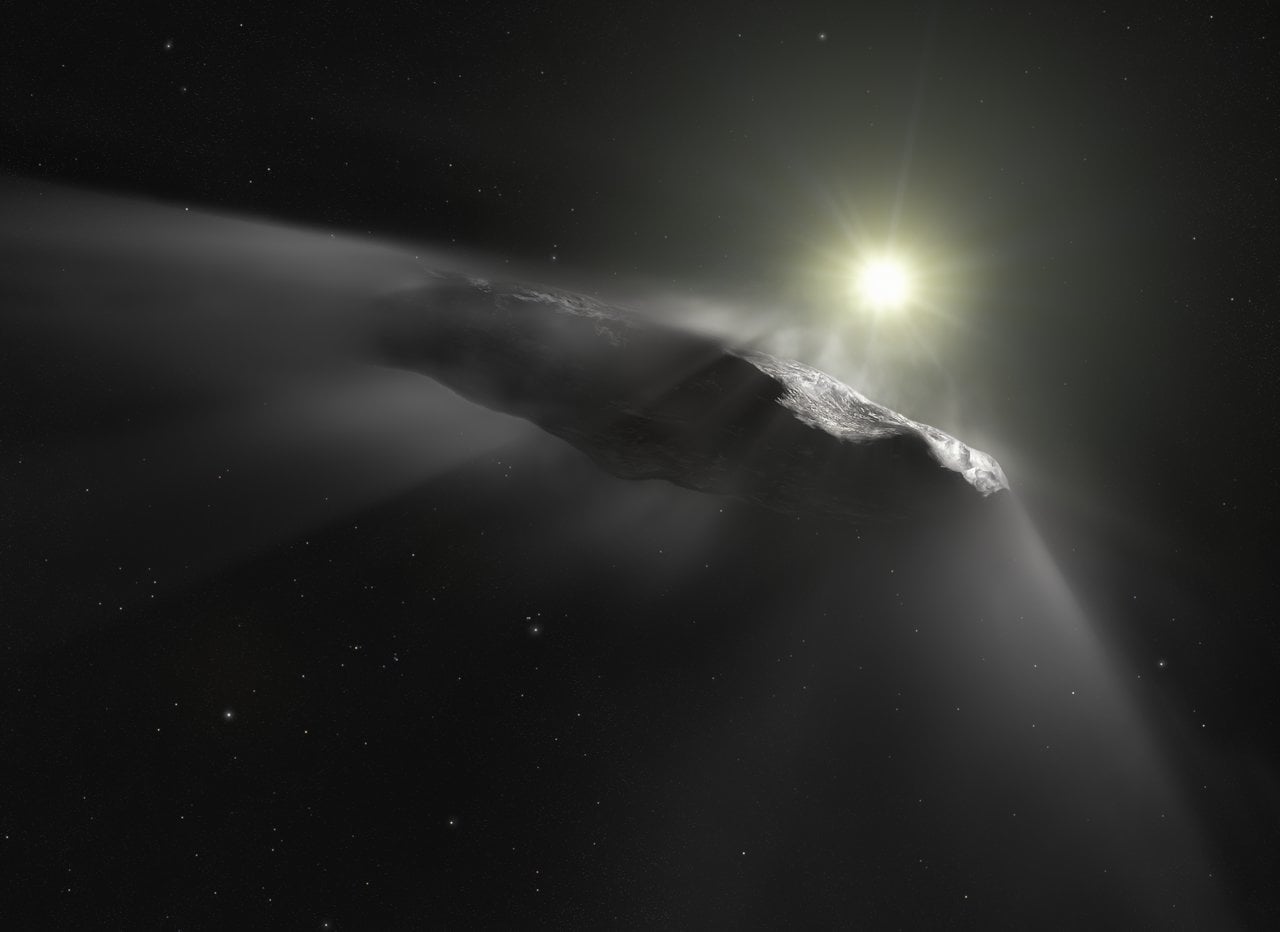
As Carl Sagan famously noted, "extraordinary claims require extraordinary evidence" (Broca's Brain, 1979). Ironically, this rule is all too often disregarded when it comes to the very thing Sagan was alluding to: claims about extraterrestrial life. History is filled with examples of irresponsible reporting, distorted evidence, and premature conclusions about extraterrestrial life, whether simple life forms or advanced space-faring species. One look at recent events certainly confirms this, with extraordinary claims of alien abductions, UAP, and interstellar objects (ISOs).
As the authors state, this includes scientists failing to meet high scientific standards and journalists making sensationalist claims. This is a time-honored issue in astrobiology, which the authors outline using four famous examples: the 1877 “canals” on Mars, the 1976 Viking lander experiments on Mars, the 2020 phosphine detection on Venus, and the 2020 Breakthrough Listen Candidate 1 (BLC1) signal. As Bibas told Universe Today via email:
Astrobiology deals with a big question: "Are we alone in the universe?" Any scientist who answers this question conclusively might become more famous than Copernicus and Darwin combined. This is because the scientific, philosophical, and theological stakes are immense; many extraterrestrial discovery scenarios would radically redefine the place of humanity in the cosmos. In this sense, astrobiology is pretty unique in comparison to other fields. Even if curing cancer or finding a recipe for cold fusion would have amazing societal impacts, it would not change the place of humanity in the cosmos.
Whereas the Search for Extraterrestrial Intelligence (SETI) has clear guidelines regarding claims and the release of information, the field is still fraught with the problems of misinformation and sensationalism. For each of the examples they analyzed, they examined the process of discovery, including how they were detected, the media reception, the ensuing scientific debate, the correction processes, and the time it took to reach expert consensus.
Responsibility
As a caveat, the authors stress that scientific discovery is a long-term process characterized by different stages, including detection, interpretation, scientific debate, correction, and eventual expert consensus. At each stage, there is a degree of uncertainty, arising from issues with the data, the methods employed, and good old-fashioned human cognitive biases. Their assessment of each case presented is based on the framework developed by Dr. Adam Bower, a Senior Lecturer in International Relations at the University of St Andrews, a member of the Scottish Space Academics Forum, and a Fellow of the Outer Space Institute (OSI).
In this framework, Dr. Bower breaks the question of responsibility into four linked aspects: Who has the ability and standing to act? Which community are they claiming to represent? What specific issue or behaviour is at stake? And what kind of response is seen as appropriate?
In their paper, Bibas and Vidal draw on this framework to address different dimensions of responsibility in astrobiology, like how evidence is gathered and interpreted, how uncertainty is communicated, and how potential impacts on wider society are taken into account. As Bibas told Universe Today via email, the responsibility of scientists and science communicators can be summarized as follows:
Both scientists and science communicators should convey a degree of uncertainty. This can include possible errors in the instruments, in the data processing, and in the interpretation of the data that may be different for other scientists. It is often too tempting to brush off these crucial dimensions of scientific inquiry in order to create more sensationalist claims. The primary duty for a communicator is thus to represent ambiguity rather than to erase it.
Needless to say, the implications of finding evidence of extraterrestrial life would be immeasurable. Not only would it be a revolutionary development, the most important in the history of science, it would also fundamentally change humanity's perspective on life and the Universe. There is literally no corner of academia, or our consciousness, that would not be affected in a profound way. As a result, the authors state, the "stakes are extraordinarily high."
Canals on Mars (1877)
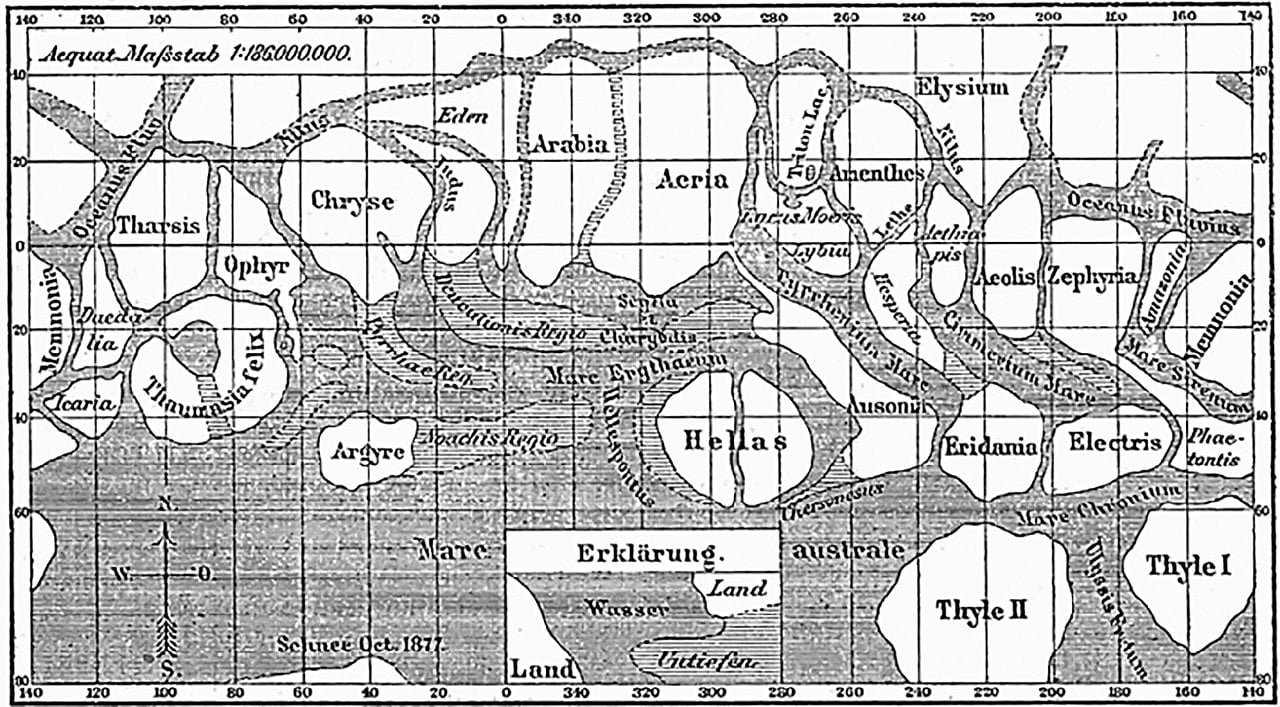
The case of Schiaparelli's map of Mars is among the best-known examples of a controversial claim about extraterrestrial life. Based on Schiaparelli's observations of Mars, he noted several darker features which he mistook for "seas" and lighter patches that he believed were "continents." In 1877, when Mars and Earth were closest to each other in their orbits (a "Great Opposition"), he noted several dark lines that he named "canali," meaning "channels" in Italian. These would later be revealed as optical illusions caused by the limited resolution of Schiaparelli's telescope.
Nevertheless, Schiaparelli’s detailed descriptions and the mistranslation of “canali” as “canals” led to widespread speculation about a civilization on Mars. Thereafter, the myth of "Martians" emerged, thanks in no small part to the writings of Percival Lowell, the famed astronomer who discovered Pluto in 1930. In 1906, Lowell published a hypothesis arguing that the Martian canals were carved to transport water from the polar ice caps. His work solidified the popular notion of a Martian civilization in decline due to an increasingly arid climate.
As the authors note, Lowell's hypothesis was amplified and promoted through a combination of "sensational headlines, science fiction, and support from high-profile figures like Alexander Graham Bell (1909)." However, repeated observations with improved telescopes failed to reproduce Schiaparelli's results, leading to ongoing debate over the possibility of life on Mars. Nevertheless, the idea of a Martian civilization endured well into the 20th century, almost a century after Schiaparelli first published his map.
It wasn't until the Mariner 4, 6, and 7 probes captured close-up images of Mars between 1965 to 1971 that the debate finally ended. As the authors note in their paper:
This historical example demonstrates how untested early-stage observations can quickly become part of public belief long before they are properly verified. Lowell’s widely publicized claim of canals on Mars framed his speculative interpretations as near-certainty. This sensationalist overamplification turned a blurry observation into a cultural myth that stuck for decades. This was not just careless from Lowell’s part; it was also a failure of responsibility from the endorsing scientists at the time.
Ironically, it was the Viking missions - which effectively ended speculation about there being life on Mars - that would also provide fodder for continued speculation about past civilizations on Mars. These missions and the astrobiology studies they performed are the subject of the authors' second example of controversial claims.
Viking Landers (1976)
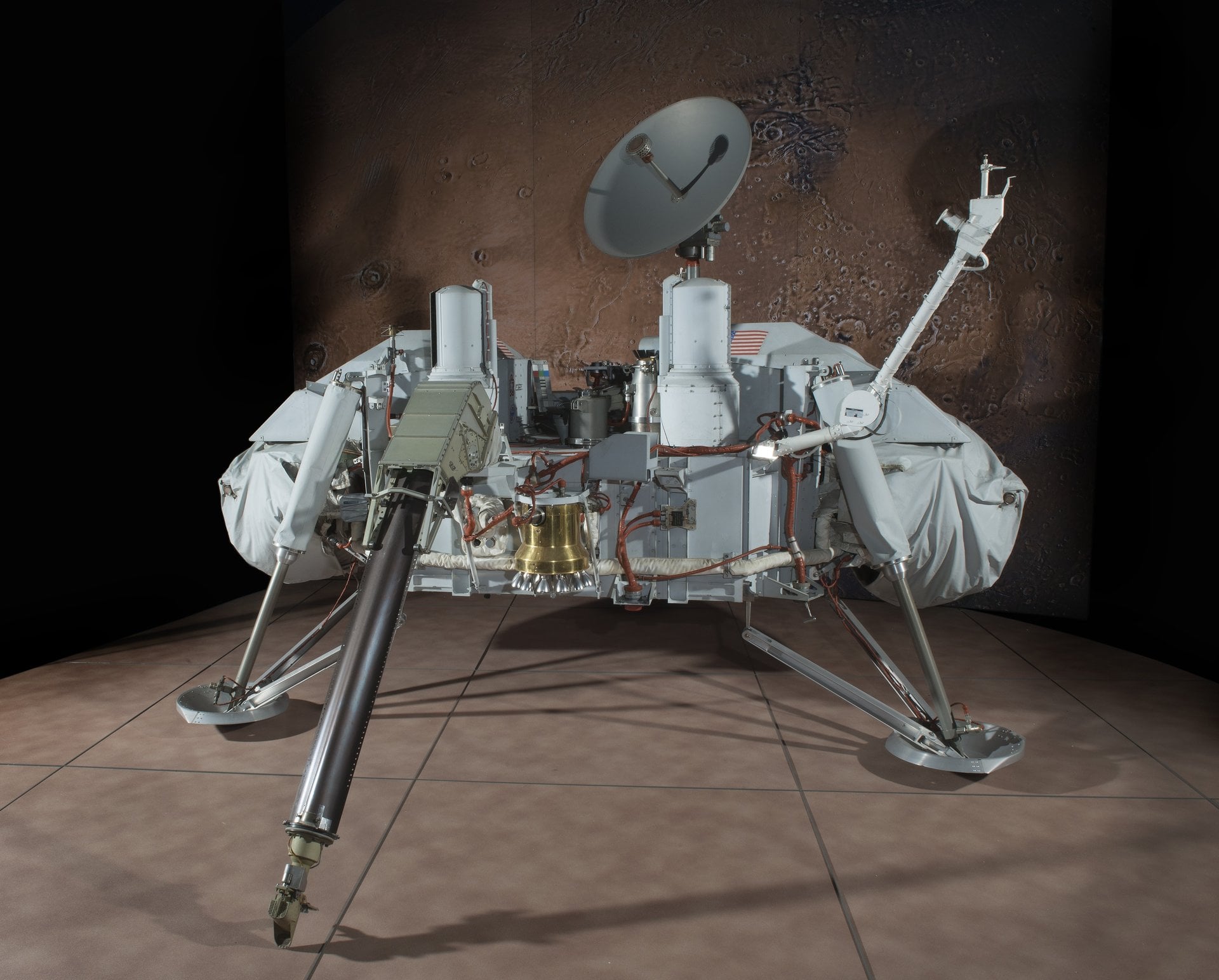
NASA's Viking 1* and *2 missions, a combination of an orbiter and lander, reached Mars in 1976 and performed the first-ever astrobiology studies on another world. This consisted of four biology experiments, including the following:
Labeled Release (LR): In the LR experiment, a sample of Martian soil was treated with a drop of a highly diluted nutrient solution containing radioactive 14C. The sample was monitored for released gases as evidence that microorganisms had metabolized one or more of the nutrients. This was to be followed by the PR experiment. Gas Exchange (GEX): This experiment involved an incubated sample of soil where the Martian atmosphere was replaced by inert helium gas. Organic and inorganic nutrients, followed by water, were then added to the soil, and the atmosphere was monitored for any changes caused by the introduction of new gases. Pyrolytic Release (PR): This experiment consisted of a Martian soil sample exposed to a simulated Martian atmosphere. Water and light were introduced to monitor for signs of photosynthesis through carbon fixation and the resulting biomass. Gas Chromatograph-Mass Spectrometer (GC-MS): This instrument analyzed the chemical components of gases released by the Martian soil samples to look for signs of organic molecules. This was performed using a gas chromatograph, and the resulting peaks were fed into a mass spectrometer to determine the abundance of each chemical.During the experiment, both landers (on opposite sides of the planet) recorded the same result: the Martian soil samples quickly released carbon dioxide. This was immediately interpreted as evidence of microbial metabolism. But the GC-MS failed to detect organic molecules in the same soil, and the GEX and PR results were later interpreted as negative or inconclusive. While NASA stressed that the Viking missions found no definitive evidence of life, the media response was largely positive, and decades of debate followed (with some still arguing for the microbial approach).
This example, the authors say, highlights how scientists can be subject to an "anchoring bias," in which they cling to initial conclusions and are slow to accept contradictory evidence. This can prevent the scientific community from considering all the evidence and from being open to alternative interpretations that could lead to unambiguous findings.
Venus Phosphine (2020)
In September 2020, a team of researchers announced the detection of phosphine gas (PH3) in the dense clouds that cover Venus. This gas is considered a biosignature since it is almost exclusively the result of biological processes here on Earth. Similar to methane, this gas is produced by the decomposition of organic matter (in this case, containing phosphorus) and is associated with wetland environments, sewage plants, and landfills. However, the authors also stated that it could be produced through some as-yet-unknown abiotic processes (as the discovery team noted).
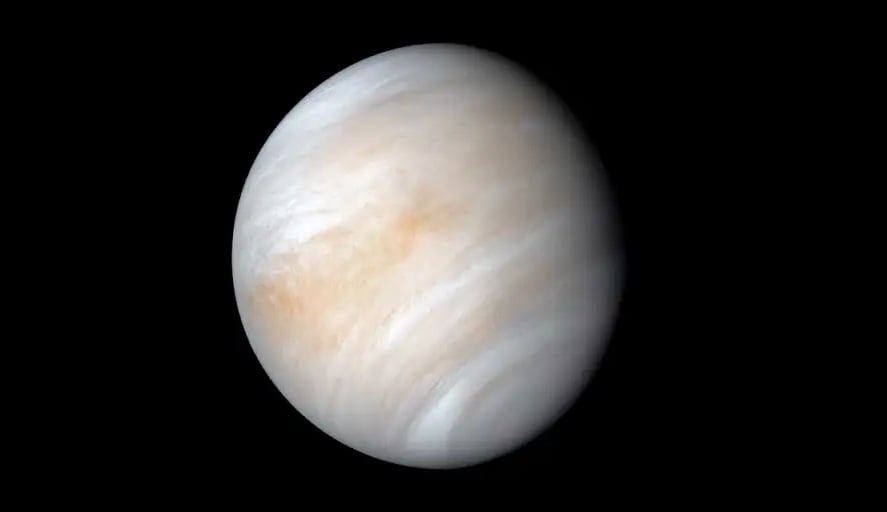
Once again, this announcement was lauded by the new media as evidence of life on Venus; however, subsequent analysis identified issues with the original detection. While the discovery team stated that the signal may have been weaker than originally thought, the phosphine detection was still valid. Debate on this issue is ongoing, and opinion is divided between those who are optimistic about the results and those who maintain that further study is needed before anything definitive can be concluded.
This example, according to Bibas and Vidal, exemplifies how the field of astrobiology is maturing and how the community is learning to handle ambiguity with greater care. This was shown by independent teams that reviewed the results and discovered calibration issues with ALMA. It was also shown by the discovery team, who acknowledged the issues and corrected their original statements. In previous cases, scientists have often maintained questionable claims despite accumulating evidence against them.
Breakthrough Listen Candidate 1 (2020)
Last, there is the example of Breakthrough Listen, a non-profit organization dedicated to detecting extraterrestrial intelligence. To date, it is the largest and most complex SETI program ever conducted, and the organization made headlines in 2020 when it became known that it had detected an unusual narrowband radio transmission coming from Proxima Centauri - the closest star to our Solar System. This system is also known for having the closest terrestrial (rocky) exoplanet beyond the Solar System, Proxima b, which orbits within its parent star's Habitable Zone (HZ).
The signal was originally detected by undergraduate student Shane Smith, who noticed a distinct narrowband frequency of 982.002 MHz in data collected by the Parkes Observatory in 2019. Consistent with SETI protocol, the team moved the Parkes radio telescope off target and then back (a process known as "nodding") to see if the signal returned, which it did. Before the team could complete their analysis, news of the signal leaked to the press, sparking a media blitz. Though the team maintained that further analysis was needed to rule out radio interference from Earth, speculation ensued.
The media sensation would continue for a year before the team (in 2021) published their first papers and declared that the signal was the result of human interference. This example, say the authors, demonstrates the danger of unverified information being leaked, which can violate scientific ethics and erode public trust in institutions. At the same time, the BI team was responsible for how they responded to the sensationalism.
Summary
To recap, these four examples demonstrate the risks associated with releasing early-stage observations without emphasizing uncertainty, clinging to initial conclusions ("anchoring bias"), and the need for internal security to prevent leaks. They also demonstrate how the scientific community should proceed when dealing with subsequent findings that contradict the original claims and how they should respond to media speculation. The recommendations they make to the scientists and science communicators can be broken down as follows:
Scientific discovery is typically a long process from the first data points to the full agreement of the scientific community and the cultural impact on the wider public. This means that a proof might still come from decades-old data; for example, there is still debate regarding the results of the Mars Viking experiments in the 1970s. Our recommendation here is to keep an interest in old data! If scientists make too bold claims without strong support, they become like kids repeatedly crying wolf. They risk eroding the trust and credibility of astrobiology as a science.
Since discovery is a shared process involving scientists, the scientific community, and science communicators, responsibility is shared and embedded at every stage of the process. To strengthen public trust in astrobiology, it is imperative that scientists, the scientific community, and science communicators continue to build a culture in which responsibility is not an afterthought but is embedded at every stage of the process.
In short, the sharing of scientific discoveries requires that the entire community acknowledge uncertainty and exercise caution at every step. In so doing, they can prevent media sensationalism from developing while also combating the spread of misinformation. After all, a lack of trust in the scientific community and the process itself is how conspiracy theories (e.g., the Moon Landing was faked, NASA is hiding info about 3I/ATLAS, etc.) become rooted in the public consciousness.