Every biologist knows how important the Great Oxygenation Event was. It took the first photosynthetic organisms hundreds of millions of years to enrich Earth's atmosphere with oxygen, leading to complex life like us. But before complex, multi-cellular life could appaer, oxygen had to enter the ocean first.
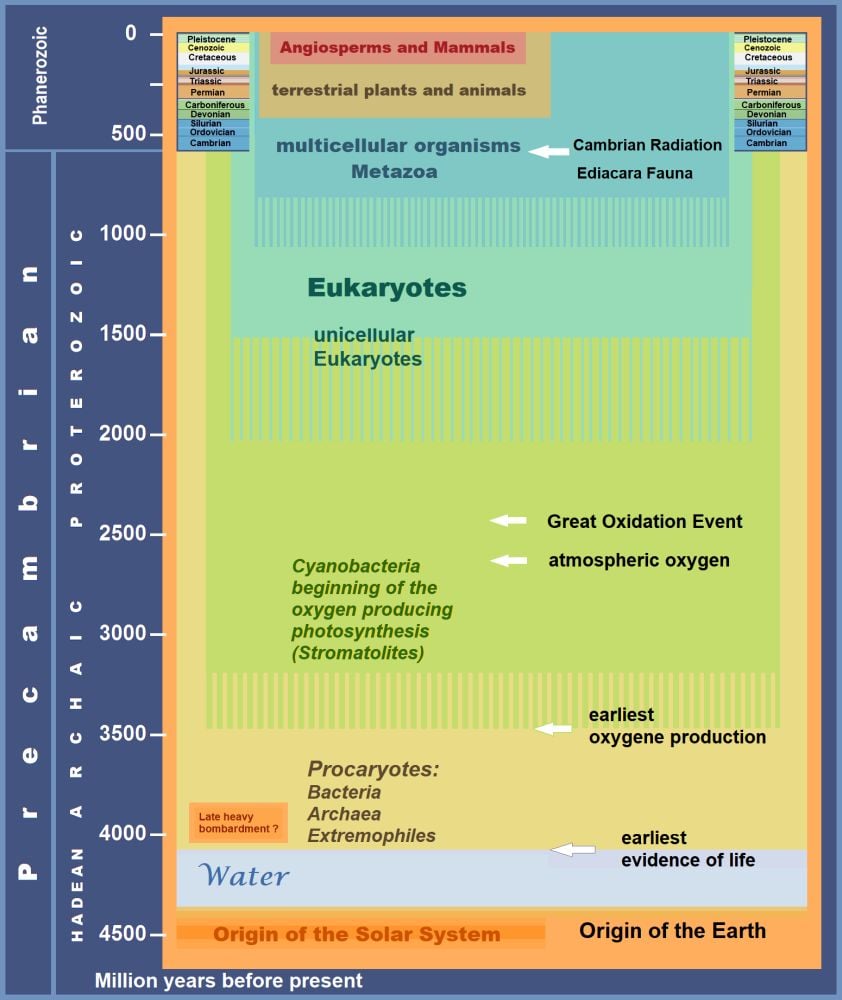
Earth's story is replete with destiny-changing events, and the GOE is definitely one of them. Why? Because oxygen allowed aerobic respiration, and aerobic respiration generates way more energy from the same amount of food than anaerobic respiration without oxygen. Once aerobic respiration appeared, life on Earth changed forever.
The GOE happened billions of years ago, and while there's no doubt that the GOE occurred, there are, as with many things regarding Earth's long and detailed history, unanswered questions. One of them concerns the oceans. Scientists have been uncertain when and how quickly oxygen entered the oceans.
New research in Nature Communications might have the answer. It's titled "Onset of persistent surface ocean oxygenation during the Great Oxidation Event," and the lead author is Andy Heard. Heard is an assistant scientist at the Woods Hole Oceanographic Institution.
"Free oxygen (O2) first began accumulating in Earth’s atmosphere shortly after the Archean-Proterozoic transition during the ‘Great Oxidation Event’ (GOE). The nature of surface ocean oxygenation at this time is, however, poorly quantified, limiting our understanding of planetary oxygenation thresholds," the authors write.
The GOE began about 2.4 billion years ago, when life was restricted to the oceans. Life would only emerge from the oceans and occupy land when there was an ozone layer to shield it from the Sun's UV radiation, and that couldn't happen until there was oxygen. So oxygen had to find its way from the atmosphere into the oceans, first.
“At that point in Earth’s history, nearly all life was in the oceans. For complex life to develop, organisms first had to learn not only to use oxygen, but simply to tolerate it,” lead author Heard said in a press release. “Understanding when oxygen first accumulated in Earth’s atmosphere and oceans is essential to tracing the evolution of life. And because ocean oxygenation appears to have followed atmospheric oxygen surprisingly quickly, it suggests that if we detect oxygen in the atmosphere of a distant exoplanet, there’s a strong chance its oceans also contain oxygen.”
Understanding the GOE largely comes down to isotope geochemistry. By measuring the abundances of isotopes of different elements in various ancient rock formations, researchers can piece together geological timelines.
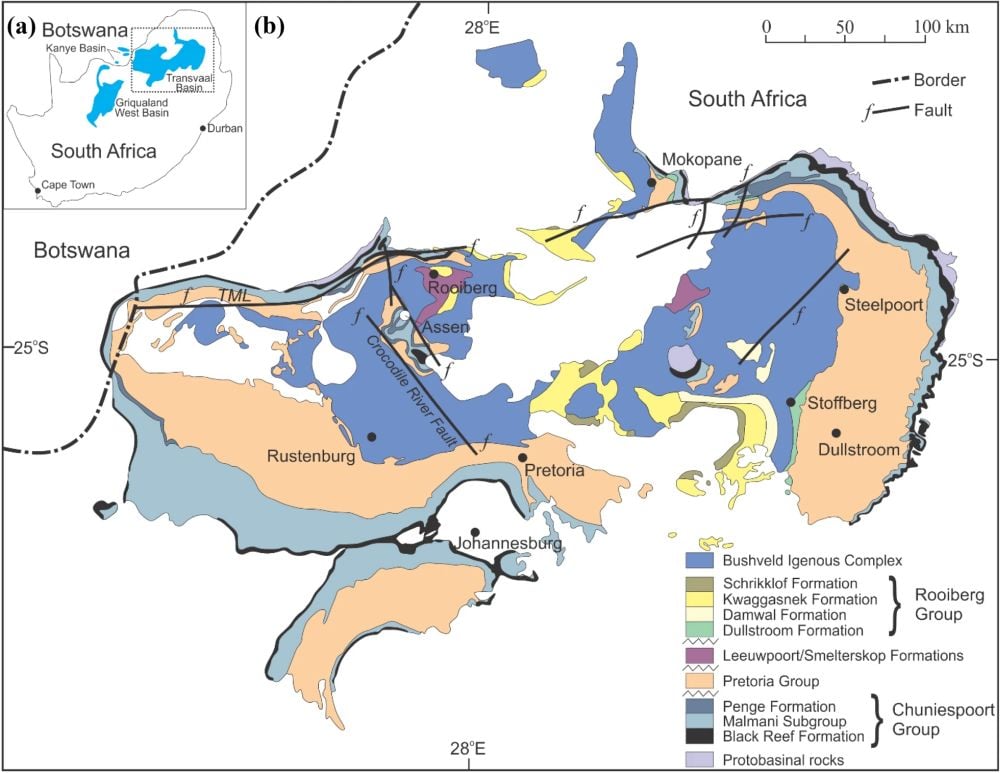
This work is based on Vanadium isotopes in ancient shale formations. "Here, we show that vanadium (V) isotope ratios in 2.32-2.26-billion-year-old (Ga) shales from the Transvaal Supergroup, South Africa, capture a unidirectional transition in global ocean redox conditions shortly above the stratigraphic level marking the canonical rise of atmospheric O2," the authors write.
The Transvaal Supergroup is widely considered to be one of the most well-preserved rock formations from ancient Earth. It allows scientists to study environmental conditions from about 2.65 to 2.05 billion years ago with clarity. It contains banded iron formations and stromatolites, important evidence in understanding how Earth' atmosphere and oceans changed over time.
Vanadium is only a trace element in the Transvaal Supergroup shales, but its presence is important evidence. The researchers found marked differences in abundances of stable Vanadium isotopes both before and after the stratigraphic level that marks the GOE.
“Vanadium is especially powerful because it responds to relatively high levels of dissolved oxygen compared to other geochemical proxies used for this period of Earth’s history. That means we can detect when oxygen in the oceans first rose above roughly 10 micromoles per liter—a few percent of modern levels,” said study co-author Sune Nielsen from the WHOI. “For context, today’s oceans average about 170 micromoles of dissolved oxygen per liter. It’s not much by modern standards, but in oceans that were previously almost entirely oxygen-free, it represents a major step in Earth’s oxygenation.”
The research shows that oxygen accumulated only in shallow seas at first, and that "... a large volume of the ocean interior could have remained functionally anoxic." The burial of oxidized Vanadium isotopes occurred almost exclusively on the continental shelves under these shallow seas.
Oxygen accumulated first in the atmosphere, and over time the oxygen pressure in the atmosphere rose. As it rose, it began to accumulate in the oceans. Rivers deposited sediment into the shallow seas and their continental shelves, creating shales in the Transvaal Supergroup. The vanadium isotopes record the oxygen available in the ocean as these sediments accumulated, creating a readable stratigraphic timeline for the accumulation of oxygen in the ocean.
The GOE took began about 2.460 billion years ago and ended about 2.060 billion years ago. This study shows that the shallow oceans contained significant levels of oxygen as early as 2.32 billion years ago. This means that oxygen found its way into the oceans fairly quickly, in geological terms, after it began to accumulate in the atmosphere.
Earth's 4.5-billion year long timeline is punctuated with consequential events. Earth is and always has been in flux. The appearance of photosynthetic life in the oceans led to an oxygenated atmosphere and oceans, and once oxygen was available, mutations appeared that allowed organisms to use it to generate more energy and complexity.
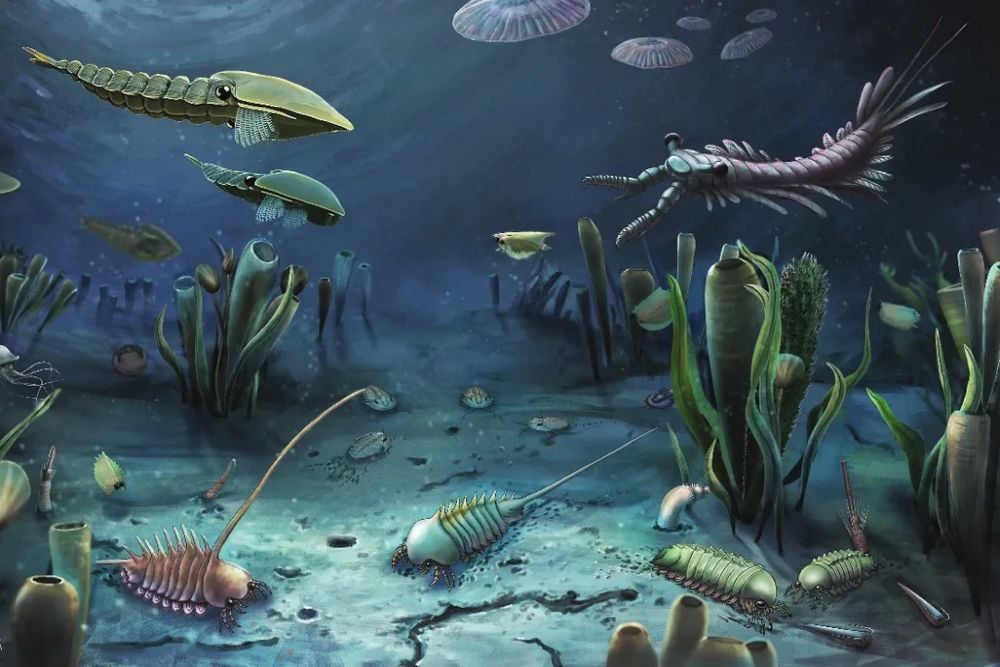
"Marine oxygenation in response to the GOE fundamentally changed the trajectory of biological innovation on Earth, ultimately laying the groundwork for complex multicellular life, and constituted a critical step in defining the ultimate nature of Earth’s habitability," the authors write. But these results could have implications beyond understanding Earth's long evolutionary road to complex life. It can also extend into the search for life on exoplanets.
In the popular imagination, the detection of life on another distant worlds means intelligent life, or at least complex, multicellular life. But the reality may be much different. Many worlds may develop simple anaerobic life. Mars may have until it became uninhabitable, and it's possible that many worlds out there host simple life for a period of time until their habitable conditions deteriorate. But detecting atmospheric oxygen on another world may mean that oxygen has accumulated in its oceans, too. That could bode well for the existence of complex life on these worlds.
“Understanding when oxygen first accumulated in Earth’s atmosphere and oceans is essential to tracing the evolution of life," said Heard. "And because ocean oxygenation appears to have followed atmospheric oxygen surprisingly quickly, it suggests that if we detect oxygen in the atmosphere of a distant exoplanet, there’s a strong chance its oceans also contain oxygen.”