Nobody expects hydrogen sulphide to smell pleasant. The molecule responsible for the distinctive odour of rotten eggs hardly suggests breakthrough science. Yet its detection in the atmospheres of four distant gas giants has just answered one of planetary science's most fundamental questions: what makes a planet a planet?
The discovery, published in “Nature Astronomy,” marks the first time hydrogen sulphide has been identified in exoplanets beyond our Solar System. More importantly, it resolves a decades long identity crisis for massive gas giants that straddle the fuzzy boundary between planets and brown dwarfs, failed stars that never quite ignited proper nuclear fusion.
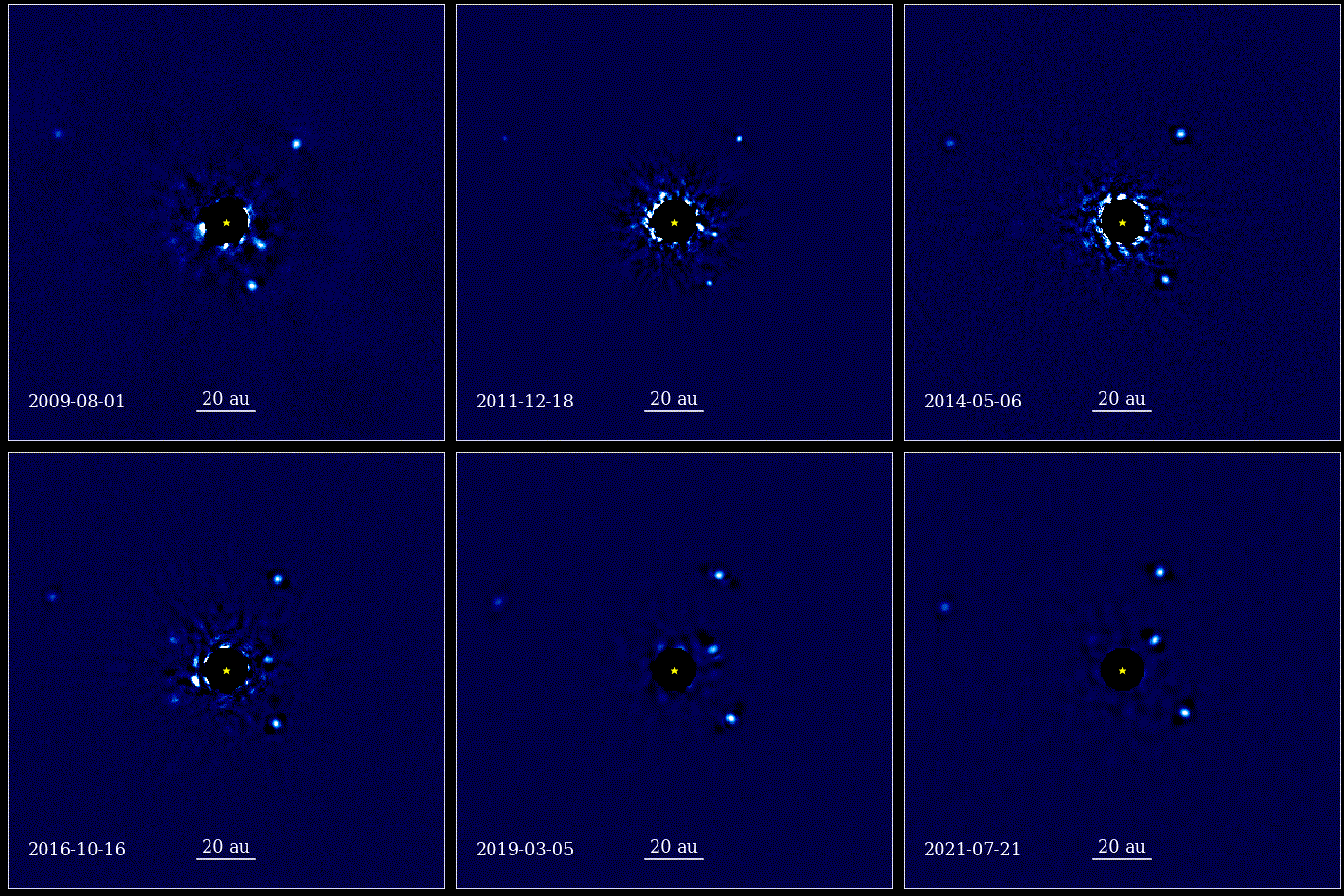
The four planets orbit HR 8799, a young star located 133 light years away in the constellation Pegasus. They're absolutely enormous. The smallest weighs five times more than Jupiter, whilst the largest tips the scales at ten Jupiter masses. They orbit at vast distances from their parent star, the closest is fifteen times farther out than Earth orbits the Sun.
"For a long time, it was kind of unclear whether these objects are actually planets or brown dwarfs. The problem stems from how we define these objects. Astronomers traditionally use a mass threshold of about thirteen Jupiter masses as the dividing line. Above that mass, deuterium fusion can occur, a lightweight nuclear process that makes brown dwarfs glow faintly like dim stars. Below that threshold, you have a planet.” - Jerry Xuan, a postdoctoral researcher at UCLA and first co-author of the study.
But reality isn't so tidy. Brown dwarfs smaller than thirteen Jupiter masses exist, whilst some planetary candidates exceed that limit. Mass alone doesn't tell us how these objects actually formed or what they're made from, leaving their true nature ambiguous.
Enter hydrogen sulphide, detected through painstaking analysis of spectral data from the James Webb Space Telescope. Jean-Baptiste Ruffio, a research scientist at UC San Diego and first co-author, developed new data analysis techniques to extract the incredibly faint signals from planets that are about 10,000 times fainter than their host star. Xuan then created detailed atmospheric models that could be compared with JWST's observations to confirm sulphur's presence.
The sulphur detection is the smoking gun. Unlike carbon and oxygen, which can be incorporated into a planet either as gas or as ice and solid matter, sulphur at the distances these planets orbit can only exist in solid form. There's simply no way these planets could have accumulated their sulphur as gas. It had to come from solid material in the disk of dust and rock around the young star. The extreme heat in their cores and atmospheres then evaporated these solids into the hydrogen sulphide gas detected today. This proves definitively that these are planets, not brown dwarfs. They formed through planetary accretion processes, gobbling up solid matter from the protoplanetary disk rather than collapsing directly from gas like a star would.
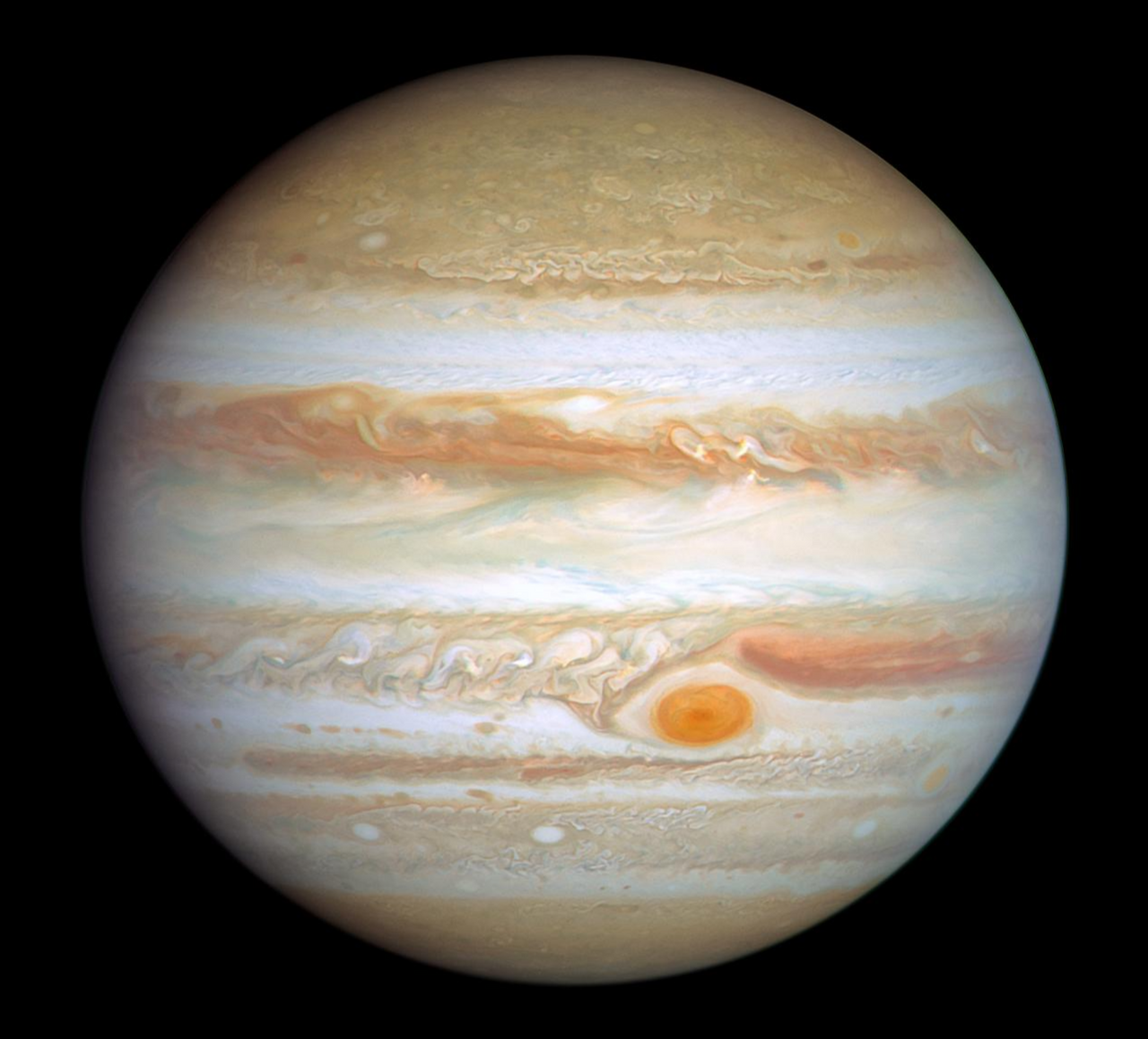
The ratio of sulphur to hydrogen in these distant worlds mirrors a puzzling pattern found closer to home. Jupiter and Saturn show unexpectedly high enrichment in heavy elements compared to the Sun, more carbon, oxygen, nitrogen and sulphur than you'd expect if they'd simply condensed from the same nebula. Now we see this same signature in an entirely different planetary system 133 light years away.
The research also advances the long term search for Earth like exoplanets. The technique that allowed researchers to visually and spectrally separate these planets from their star will eventually be refined to study smaller, rocky worlds. We're probably decades away from obtaining the first spectrum of a true Earth analogue, but when that day arrives, astronomers will be searching for biosignatures like oxygen and ozone in its atmosphere.
Source : Hydrogen sulfide detected in distant gas giant exoplanets for the first time