In a first, ESA’s Proba-3 space-based coronagraph tracks space weather back to its source.
It has been a dream of astronomers and solar scientists for ages. A new mission gives solar researchers a powerful new tool in their arsenal: on-demand, total solar eclipses. Launched in 2024, The European Space Agency’s Proba-3 mission has proven the feasibility of a free-flying, space-based coronagraph. Now, first science results from the mission are giving us a view of the origin of space weather. The results were recently published in *The Astrophysical Journal Letters*.
The mission works with two spacecraft flying in formation: the Occulter spacecraft which physically blocks out the Sun, and the Coronagraph, which observes the eclipse and the solar corona. The two spacecraft follow a looping, highly elliptical orbit around the Earth in a 19.7 hour period. Observations for the mission are possible in the hours near apogee, 60,530 kilometers from Earth past geosynchronous/geostationary orbit.
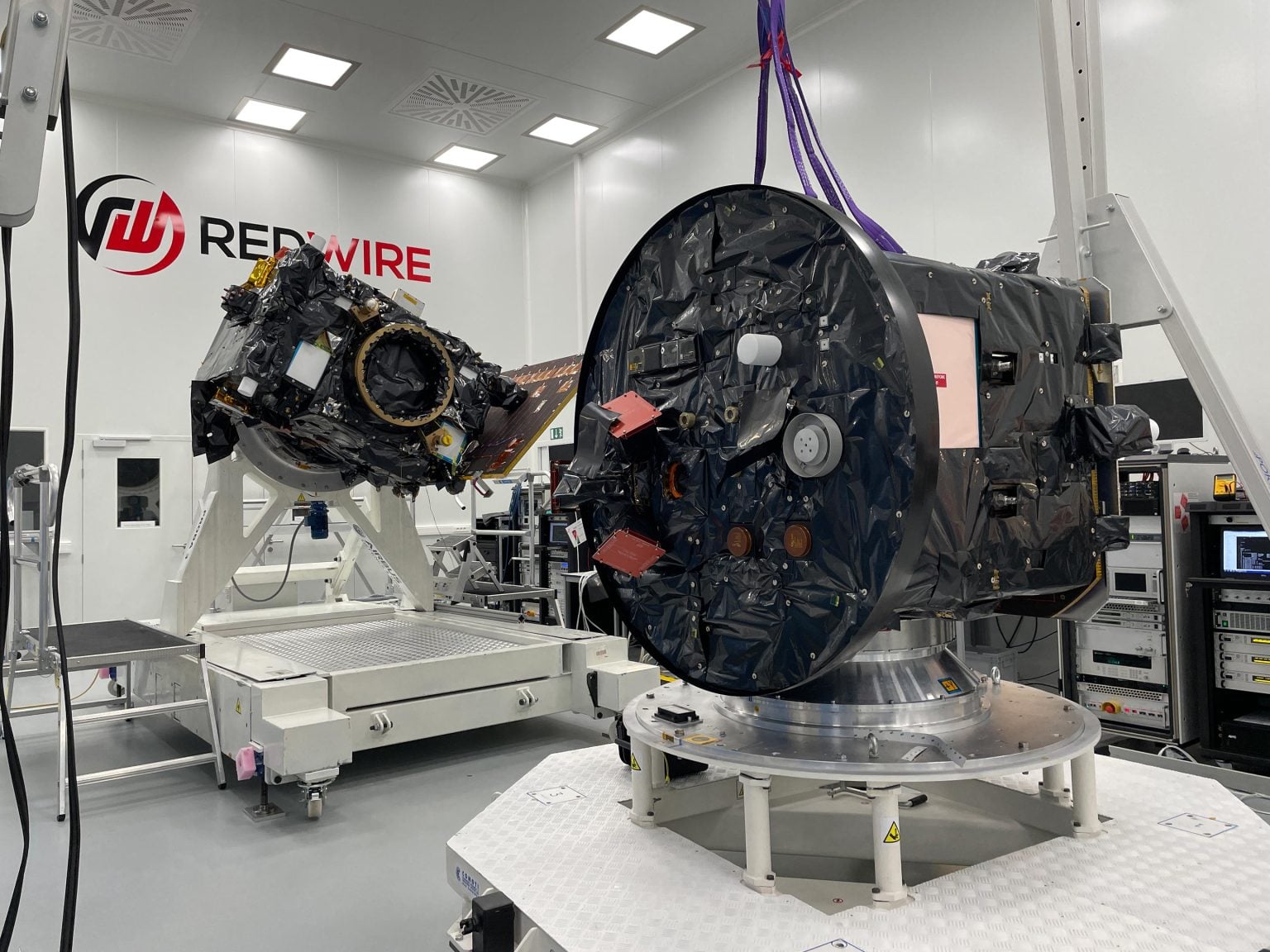
The orbit and the technical challenges of the mission are extreme, as the two spacecraft must fly 150 meters apart during the observation phase, and maintain that distance with submillimeter precision. A space-based, long baseline coronagraph is necessary to eliminate distortion due to the Earth’s atmosphere, and give the mission an uninterrupted view.
To date, ESA researchers have gathered 250 hours of high-resolution videos of the solar corona, over a span of 57 artificial eclipses. For context, the maximum length of totality for a total solar eclipse on Earth is 7.5 minutes in duration. Proba-3 has already produced 2000 times that. Proba-3 will surpass its 2 year nominal mission in December 2026.

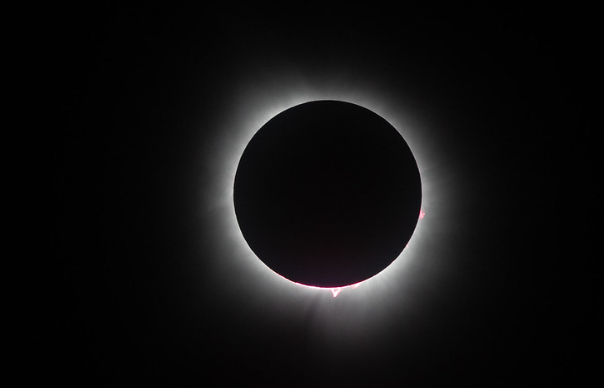
The mission has three primary instruments. The Digital Absolute Radiometer (DARA) is mounted aboard the occulter spacecraft, and measures the solar energy output over time. The 3D Energetic Electron Spectrometer (3DEES) measures the energy and field direction of Earth’s Van Allen radiation belts as the mission passes through them.
The primary instrument used for observing the solar corona is the ASPIICS (Association of Spacecraft for Polarimetric and Imaging Investigation of the Corona of the Sun). ASPIICS can see down to just 70,000 kilometers (1/10 of the solar radius) from the ‘surface’ or the dazzling photosphere of the Sun. ASPPIICS captures two images a minute.
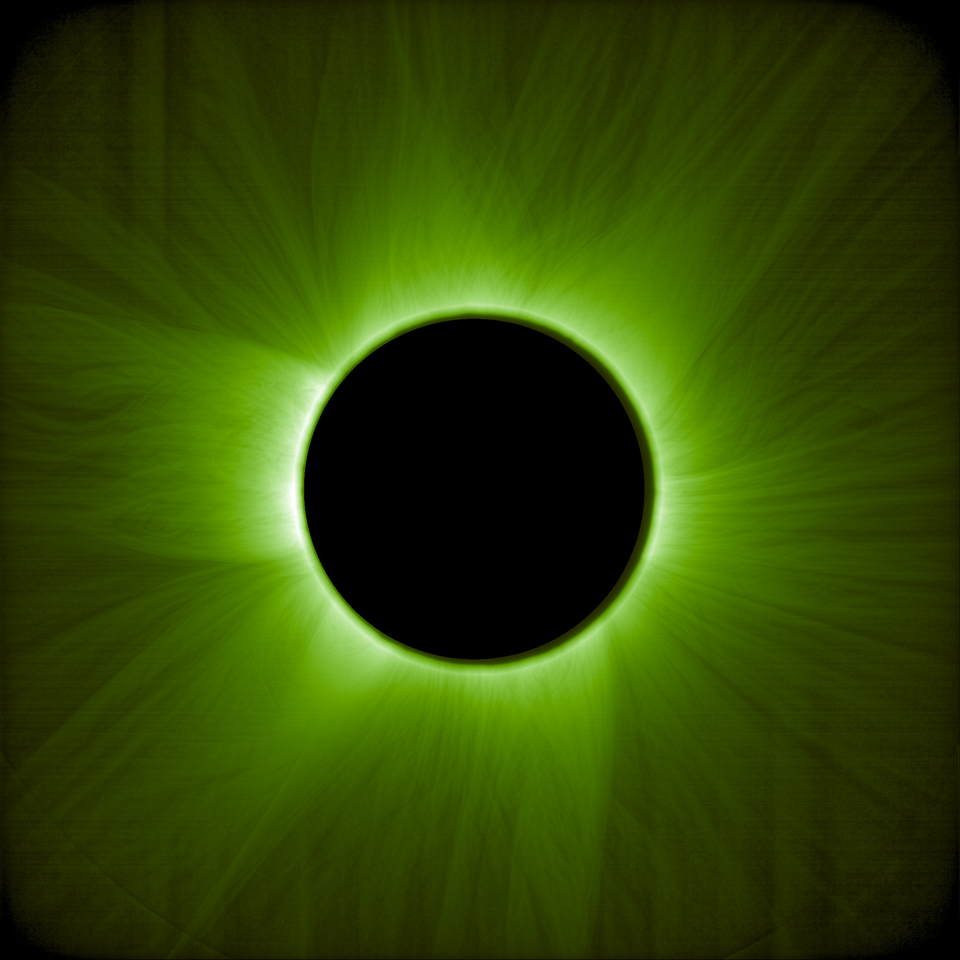
Proba-3 is designed to address key mysteries of the origin and development of space weather. How do Coronal Mass Ejections (CMEs) form? What accelerates the solar wind up to velocities exceeding 2,000 kilometers and speed? And how does the corona reach temperatures hotter than the photosphere surface (in what’s known as the ‘coronal heating mystery’) to the tune of millions of degrees Celsius?
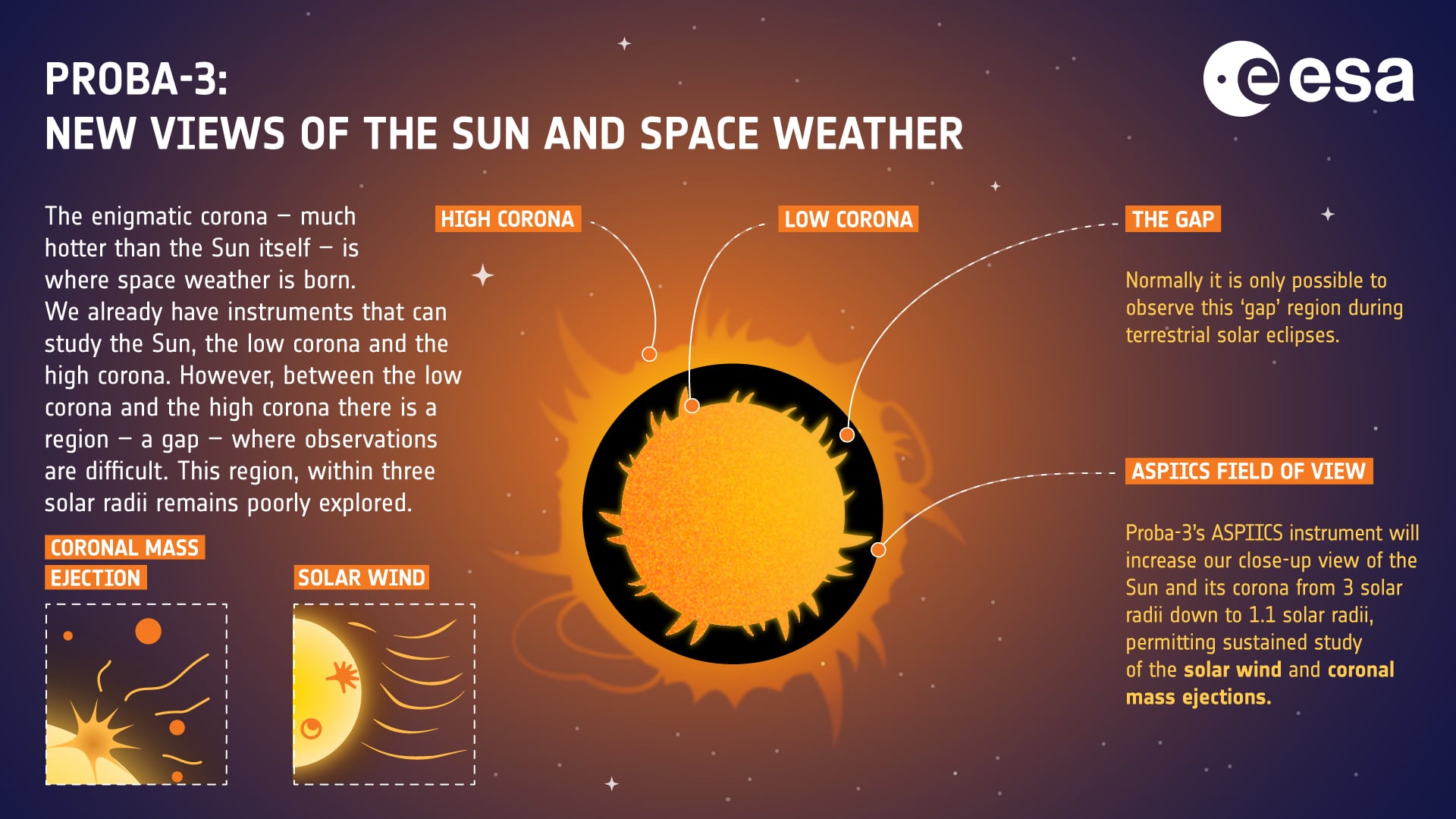
Other spacecraft, such as the joint ESA/NASA Solar Heliospheric Observatory (SOHO), the Compact Coronagraph (CCOR-1) on NOAA’s GOES-19 mission in GEO orbit, and India’s Aditya-L1 all have coronagraphs, but none can explore the low corona near the Sun where space weather originates like Proba-3. Specifically, the mission pushes our view of the corona down from 3 solar radii to just 1.1 solar radii.
Early findings from Proba-3 have already surprised researchers. Like terrestrial wind, solar wind can be either fast or slow moving, occurring in bursts or as a smooth wave. Fast solar wind seems to flow out of coronal holes, but ‘slow’ solar wind is difficult to study, and is thought to be caused by magnetic reconnection reversals. These are seen in Proba-3’s view as bright streamers or rays. But so-called ‘slow’ solar wind is often observed moving in the low corona at a faster pace than thought, at 250 to 500 km/s versus the theorized 100 km/s.
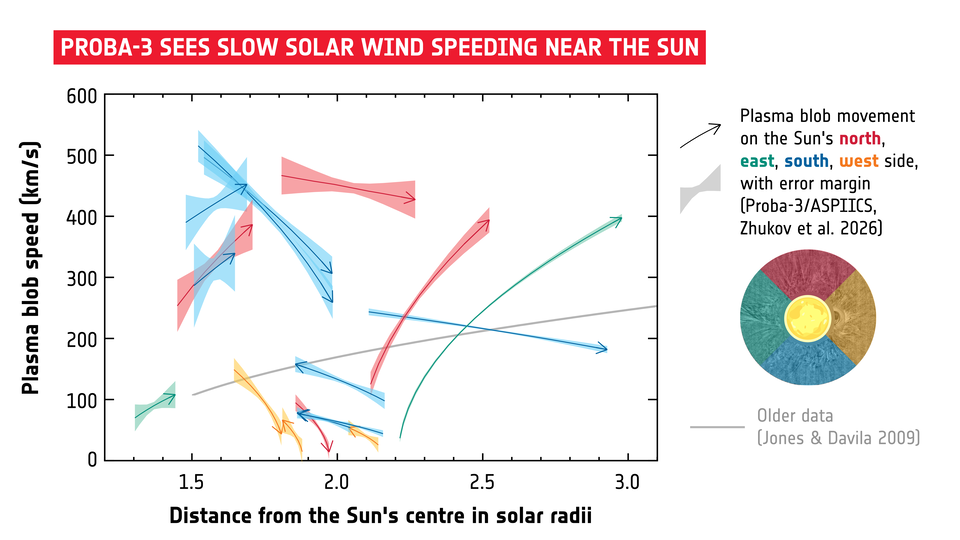
“In the inner corona, a region very difficult to observe, we saw slow solar wind gusts moving three to four times faster than expected,” says Andrei Zhukov (Royal Observatory of Belgium and lead researcher in the study) in a recent press release.
Slow solar wind is complex, but is clearly a key factor in the development of space weather.
And Proba-3 is just getting started, as researchers continue to pour over data from the mission. Science from the Proba-3 mission will prove crucial to understanding and forecasting space weather and its impact on our modern technological society, as we learn to live with our tempestuous host star.