It's not often that astronomers can observe huge changes in a galaxy's brightness over the course of a few years. Most galaxies change in brightness (and other characteristics) over millions or billions of years. So, when images of the 10-billion-light-year distant galaxy J0218-0036 showed that it dimmed down by a twentieth of its previous brightness in just 20 years, observers were surprised. What could cause it to do that? That's not "normal" for AGN.
Astronomers from the Chiba Institute of Technology, University of Potsdam (Germany), University of Toyama, Instituto de Astrofísica de Canarias (Spain), the National Astronomical Observatory of Japan, and Ritsumeikan University spotted this dimming when they compared images from the Sloan Digital Sky Survey to images and data taken by the Hyper Suprime-Cam on the Subaru Telescope. They found a decline in brightness of the central active galactic nucleus (AGN) of the galaxy over a period starting in the early 2000s to 2023. That's not a normal dimming time frame for AGN. These objects usually vary in brightness by only 30 percent over longer periods of time. That rapid rate raises a lot of questions about what's going on at J0218-0036.
Understanding AGN and How They Change
An active galactic nucleus is just what the name implies: something active at the heart of a galaxy. It's usually a supermassive black hole stuffed with enough mass to make at anywhere from a hundred thousand to several billion Suns. The intense gravitational pull of the black hole is enough to suck in enough material in the form of gas and dust to feed itself for quite a long time. As that material swirls into the black hole through an accretion disk, it gets heated by friction. That raises the temperatures and causes the material to emit prodigious amounts of energy. That action causes the AGN to emit radiation across a wide range of wavelengths of light. Assuming a mostly constant supply of material for the black hole to feed on, the radiation varies only slightly as it sucks down varying amounts of gas and dust from its surrounding neighborhood. If the accretion disk delivers less material because the flow of gas dimishes, then the radiation it gives off will decrease and that affects the brighness of the AGN.
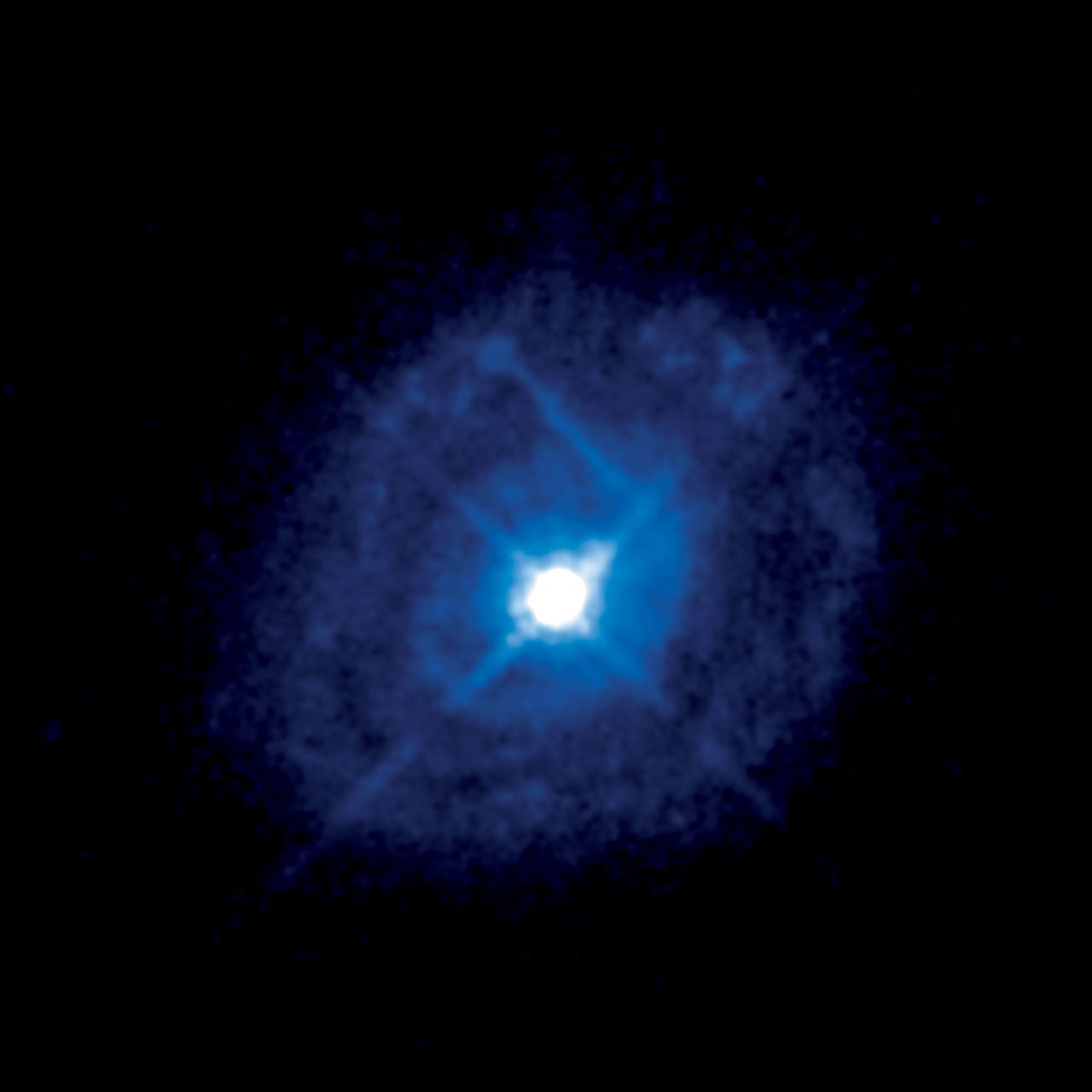
The luminosity of J0218-0036 that astronomers observed included both the brightness of the AGN region and the brighness of the rest of the galaxy. Long-term observations of the galaxy gave astronomers a chance to separate the brightness of the AGN from the host galaxy's luminosity. They found that the activity of a supermassive black hole, particularly the one at J0218-0036 can change brightness over short time periods. That's interesting, since the canonical wisdom suggested that AGN brightnesses varied much more slowly, perhaps over tens of thousands of years.
According to Tomoki Morokuma, who led the observations and subsequent studies of this AGN's activity, this finding changes everything. "It is fascinating that an active galactic nucleus can change its brightness so dramatically over such a short period of time, and that this fading appears to be caused by a large change in the accretion rate onto the supermassive black hole," Morokuma said. "Using wide-field survey data, such as those from Hyper Suprime-Cam, we hope to discover more objects like this and learn how the activity of supermassive black holes shuts down and restarts."
So, Is J0218-0036's AGN Running Out of Fuel?
The team's findings raise a lot of questions about what causes the quick dimming of this galaxy's AGN. In this case, it looks like activity of the central black hole is declining a lot. The overwhelming explanation is that the supermassive black hole is running out of fuel. The research team compared observations of the core of the galaxy in both infrared and optical wavelengths. They compared their findings with theoretical models of AGN activity. The team saw that the rate the black hole consumes gas from its accretion disk dropped to about a fiftieth of its previous level. That happened very quickly, over a period of 7 years. It's a big drop and points to a black hole rapidly losing its sustenance.
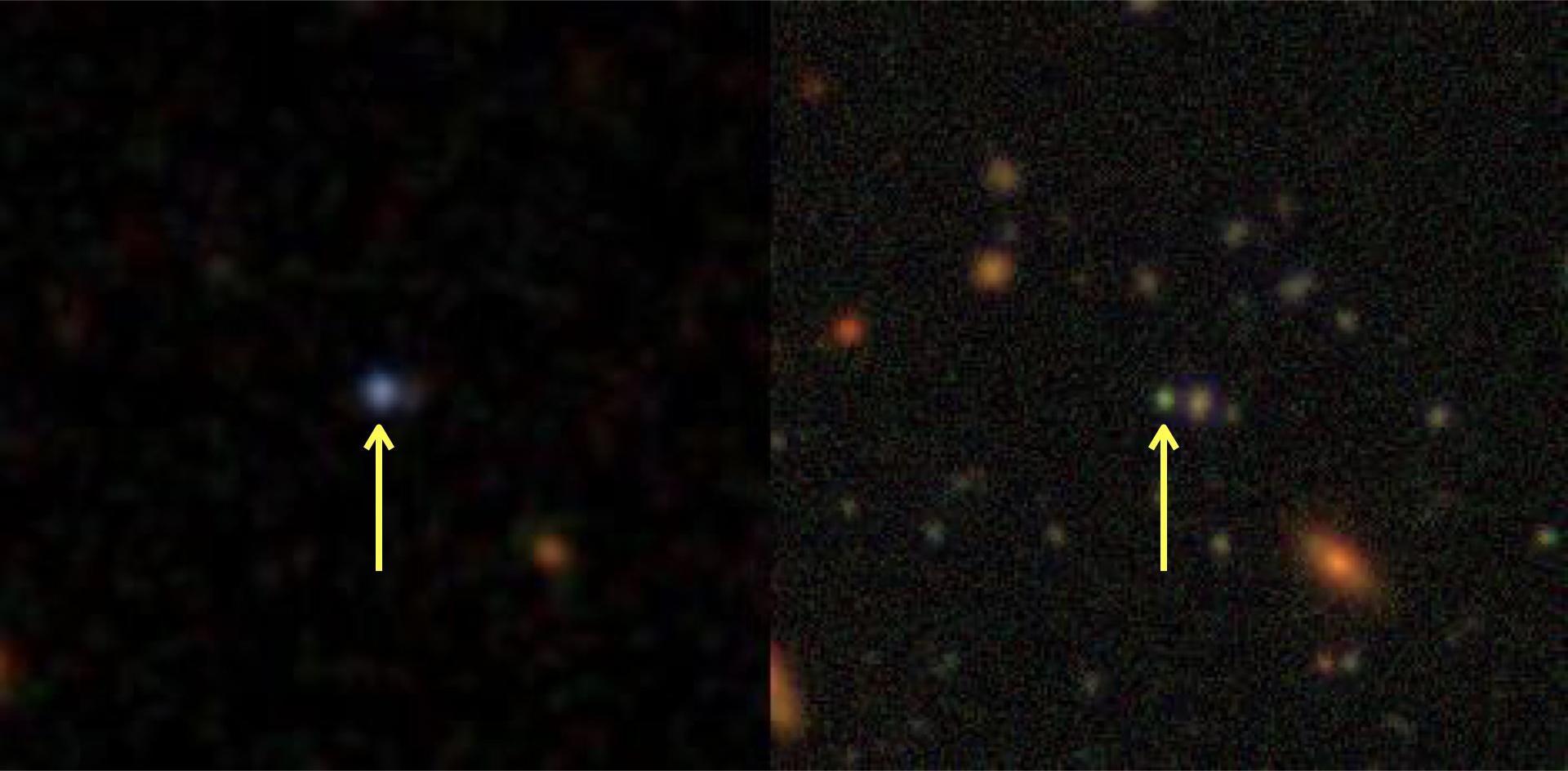
While it's a good explanation, scientists need to rule out other possibilities, such as clouds of dust intermittently blocking the light from the AGN. Remember, however, that the light from the AGN is observed across much of the electromagnetic spectrum. Dust clouds wouldn't block all of it. So, that means the changes are coming from within the AGN and the accretion disk that feeds the black hole.
The question now remains: what causes a supermassive black hole to lose its food source? It's well known that these black holes can affect their galaxies by, for example, choking off star formation as they gobble down nearby material. But, what would chock off the material feeding the accretion disk around the black hole? That's what astronomers will focus on next as they do more multiwavelength observations of J0218-0036 and other AGN in the Universe.. If many more "fading" or dormant ones are discovered in future wide-field imaging surveys, they'll reveal more clues about how galaxies and their central black holes evolve together.
For More Information
A Possible Shutting-down Event of Mass Accretion in an Active Galactic Nucleus at z ~ 1.8