The Universe is an unfathomably large and ancient place. It began with a giant explosion roughly 14 billion years ago (the Big Bang) and has been in a state of expansion ever since. Based on current estimates, there are more than 2 trillion galaxies in the "observable Universe," some with as many as a trillion stars each. Within our galaxy alone, there are between 100 and 400 billion stars and 100 to 160 billion planets. And according to every bit of scientific evidence available, the ingredients for life are everything in abundance.
For this reason, scientists can be forgiven for the conjecture that life exists elsewhere in the Universe, and advanced life to boot. Not only is it a foregone conclusion based on science, but there is ample historical precedent for assuming that humanity is not alone. With the birth of modern astronomy in the late-19th and early-20th centuries, scientists sought to address this question head-on by searching for indications of life and civilizations. These efforts were initially directed at Earth's immediate celestial neighbors: the Moon, Mars, and Venus.
As technology improved and our perception of the Universe expanded, these efforts reached beyond the Solar System. The way in which we've searched for signs of intelligence has also expanded, moving beyond radio astronomy to include optical, thermal, and other methods. Along the way, several foundational principles emerged that have helped frame the search that seeks to address one of the greatest fundamental questions of all: Are we alone in the Universe?
Why We Search
Herein lies another important question that speaks to the very heart of SETI: "Why should we be searching for extraterrestrial life in the first place?" If, as a species, we are uncertain that there is any life out there beyond Earth and the Solar System, why dedicate the time and resources to searching for it? There are plenty of perfectly rational reasons for doing this, including the fact that the scientific returns of finding evidence of technological activity ("technosignatures") would be immense.

This was a major motivation for experiments conducted during the Cold War, in which scientists on both sides of the "Iron Curtain" sought to find evidence of alien civilizations and even make contact, because they feared that whoever did so first might secure a technological advantage over the other. And if peaceful contact and technological exchanges are not an option, there's the alternative incentive of knowing what we're up against in case we need to deal with a "War of the Worlds" situation someday.
Second, there's the way it can be done at relatively low cost, since no dedicated facilities need to be created for SETI experiments to take place. Between Project Ozma, the first true SETI experiment, the Commensal Open-Source Multimode Interferometer Cluster (COSMIC) at the Karl G. Jansky Very Large Array (VLA), and the modern Breakthrough Listen initiative, all SETI surveys have piggybacked off existing radio, optical, infrared, and other observatories.
But without a doubt, the greatest reason for searching for intelligent life beyond Earth would be the profound implications it would have for our understanding of humanity's place in the Universe. Knowing we are not alone would serve to inspire countless generations to think beyond our existence here on Earth, and even beyond the boundaries of our Solar System. Why think in planetary or interplanetary terms when you can think in cosmic terms?
As Carl Sagan and William Newman famously said in their seminal paper, "The Solipsist Approach to Extraterrestrial Intelligence" (1982):
One of the distinctions and triumphs of the advance of science has been the deprovincialization of our worldview. In the sixteenth century there were battles over whether the Earth is at the center of the Solar System; in the seventeenth century about whether the stars are other suns; in the nineteenth century, about whether the Earth is much older than real or mythical human history; in the eighteenth to twentieth centuries about whether the spiral nebulae are other galaxies [...] like the Milky Way... and in nineteenth and twentieth centuries about whether human beings have arisen and evolved as an integral part of the biological world...
Every one of them has been settled decisively in favor of the proposition that there is nothing special about us: we are not at the center of the Solar System; our planet is one of many; it is vastly older than the human species; the Sun is just another star... in the Milky Way, which in turn is one galaxy among perhaps hundreds of billions. We humans have emerged from a common evolutionary process with all the other plants and animals on Earth. We do not possess any uniquely valid locale, epoch, velocity, acceleration, or means of measuring space and time."
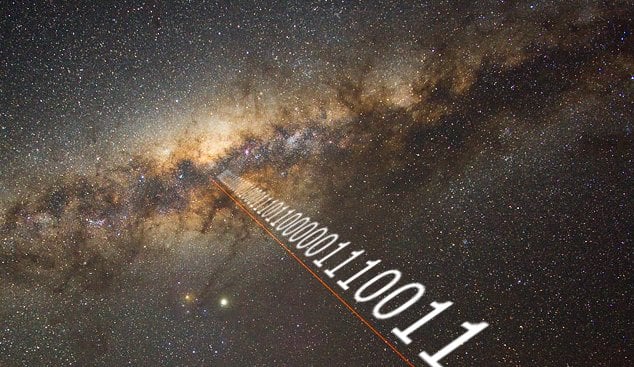
Fermi's Big Question
In 1950, famed Italian-American physicist Enrico Fermi was visiting with colleagues at the Los Alamos National Laboratory, where he had worked five years prior as part of the Manhattan Project. According to accounts provided by Fermi's colleagues, Emil Konopinski, Edward Teller, and Herbert York, the four were walking to Fuller Lodge. As they walked, the conversation turned to UFOs and speculation that aliens were visiting Earth. While Fermi and his colleagues did not put any stock in stories of "flying saucers," the subject inspired him to think further about it.
The conversation moved on to other topics as the four reached the lodge and ventured to the cafeteria for lunch. As they were sitting down, Fermi allegedly said (a propos of nothing), "Where is everybody?" His colleagues laughed, as they knew precisely what he was talking about. Despite it being unprompted and off-topic, they understood that Fermi was asking a very profound existential question: If there is intelligent life in the Universe, and there appears to be every reason to believe there is, why haven't we seen evidence of it?
Fermi and Teller then began discussing probabilities, and others joined them in jotting calculations down on their napkins. In essence, they were trying to calculate the odds of extraterrestrial civilizations existing in our corner of the Milky Way and whether or not any were likely to visit Earth in the near future. After settling on a few assumptions - i.e., interstellar flight being possible - some tentative conclusions were reached.
As York recalled, they “followed up with a series of calculations on the probability of earthlike planets, the probability of life given an earth, the probability of humans given life, the likely rise and duration of high technology, and so on. He concluded on the basis of these calculations that we ought to have been visited long ago and many times over."
As time went on, Fermi's "lunchtime conversation" with his colleagues would not only become something of a local legend. It would go on to inspire the Fermi Paradox, which remains integral to the question of the existence of extraterrestrial intelligence (ETI) and humanity's search for life in the Universe.
Early Experiments
One of the most challenging aspects of determining when the search for extraterrestrial life began is the definition of SETI itself. On the one hand, there is "passive SETI," the act of listening for possible transmissions and signals from space. "Active SETI," on the other hand, refers to sending messages into space in the hope that an extraterrestrial civilization (ETC) will hear them and respond. This distinction has led to the emergence of Messaging Extraterrestrial Intelligence (METI) as a separate field of study. However, this distinction was not used in the past; thus, "passive" and "active" experiments are generally considered together.
In this respect, the first "active SETI" experiment was proposed by the 19th-century German mathematician and astronomer Carl Friedrich Gauss (though there is debate over who first proposed the idea). In any case, Gauss is credited with a 1820 proposal wherein he suggested drawing a petroglyph of a right triangle and three squares on the surface of the Earth, large enough to be seen from the Moon or Mars. This symbolic representation of the Pythagorean theorem would signal to extraterrestrial beings using the language of mathematics.
What is arguably the first example of "passive SETI" was conducted by Nikola Tesla in 1899 during experiments at his Colorado Springs laboratory. On this occasion, Tesla believed he had detected an extraterrestrial radio signal because of how it ceased as soon as Mars descended beneath the horizon. Further analysis found the detection inconclusive, with potential explanations ranging from radio interference from a neighboring experimental station or a false detection to background noise caused by Jupiter's moon Io passing through its magnetic field.
Other early radio pioneers like Guglielmo Marconi and Thomas Edison reported detecting signals with their wireless telegraphy equipment that they believed originated from Mars or outer space. Percival Lowell's telescopic observations of Mars in the late-19th and early-20th centuries could also be considered examples of SETI, where he searched for "canals" and other indications of an advanced civilization.
And there was the "National Radio Silence Day" campaign in August of 1924, led by American astronomer David Peck Todd and the U.S. Naval Observatory. People were encouraged to turn off their radios for five minutes on the hour, every hour, for three days (August 21st to 23rd), coinciding with a Mars Opposition that brought the planets to their closest distance in a century. During this time, Todd and his colleagues listened for signals from Mars using a dirigible-mounted radio receiver.
From these beginnings, the field of SETI would soon emerge as a scientific discipline and practice. While it is always difficult to say when a historical phenomenon truly began, historians and scientists generally agree that SETI began in 1960 with the first dedicated experiment designed to listen for transmissions from another solar system. Stay tuned for part two, where the details of this experiment will be revealed!