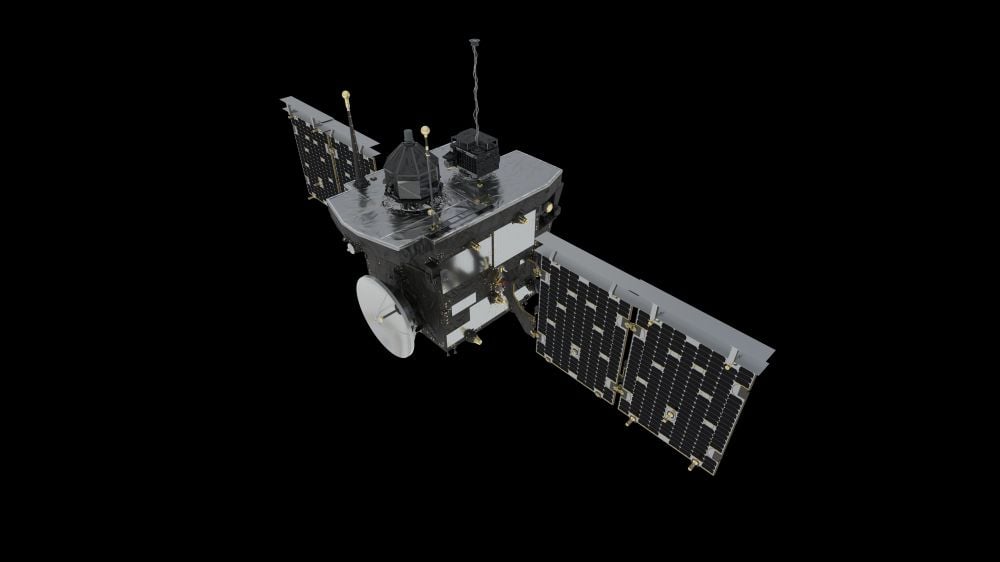
Sometime in 2029, the European Space Agency is scheduled to launch its Comet Interceptor Mission. The Interceptor will wait for a long-period comet to arrive in the inner Solar System then set off on a trajectory to rendezvous with it. These objects are ancient and primordial, carrying material largely unaltered by time that holds clues to how the Solar System formed.
A new white paper shows how the Comet Interceptor could also be used to rendezvous with an Interstellar Object (ISO) like comet 3l/ATLAS. It's titled "Intercepting Interstellar Objects," and it's been submitted to the UK Space Frontiers 2035 prioritisation exercise. The lead author is Colin Snodgrass from the Institute for Astronomy at the University of Edinburgh.
The first attempt to visit a comet with a spacecraft was in September in 1985, when NASA's International Cometary Explorer (ICE) passed through the tail of comet Giacobini-Zinner. It didn't carry any cameras, so there are no pictures. Other missions followed, including another 1985 mission to Halley's Comet. In 1999, NASA's Stardust mission became the first to return a sample from a comet, delivering dust grains to Earth in 2006. Then there was NASA's Deep Impact mission to comet Tempel 1, and the ESA's Rosetta mission to 67P/Churyumov-Gerasimenko.
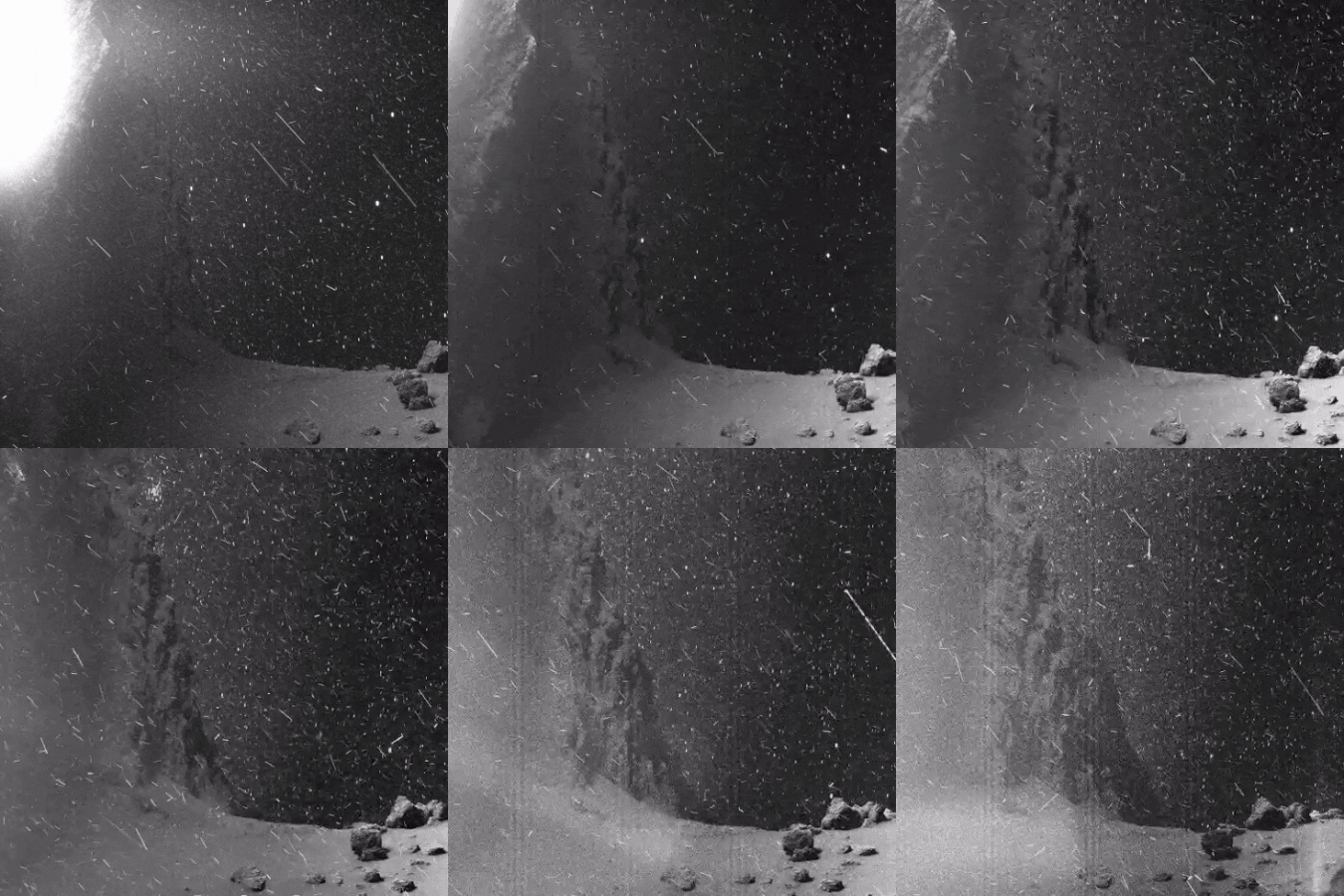
This well-known gif shows dust and cosmic rays on 67P/Churyumov-Gerasimenko's surface.
The ESA's Comet Interceptor mission is different from all of those in one critical way. It will be launched before its target is known and will be parked in space to wait. This mission architecture makes it suitable for visiting an ISO, since there's very little lead time to prepare for these objects. They arrive in the inner Solar System without much notice and leave without staying for long.
"Comet Interceptor will wait in space until a suitable long period comet is discovered, allowing rapid response to perform a fast flyby of an object that will be in the inner Solar System for only a few years; an enhanced version of this concept could realistically provide the first in situ investigation of a visitor from another star system," the authors write.
The study of exoplanets has shown us that in some ways our Solar System is an outlier. The most common type of exoplanet, sub-Neptunes, aren't represented in our Solar System. Other systems contain massive gas giants called hot Jupiters that orbit extremely close to their stars, while our Jupiter is much further away. Answers to why our system is so different may be in ISOs.
"The next step beyond the detailed investigation of a relatively pristine remnant from our own Solar System’s protoplanetary disc will be to compare this with a body that formed elsewhere, to investigate the commonalities and differences between the planet formation process in different places and times in the galaxy," the authors write.
Comets and asteroids are remnants of the planet-building process. They're leftover building blocks that didn't find a planetary home. They hold clues to the state of the Solar System when it was young. Comets are especially good reservoirs of this ancient material because they spend much of their time at a great distance from their star. Their contents are preserved in the frigid conditions far from their star. That's the impetus for missions like Rosetta and Deep Impact. Visiting an interstellar comet could open the door to a new understanding of planet formation in a solar system other than ours.
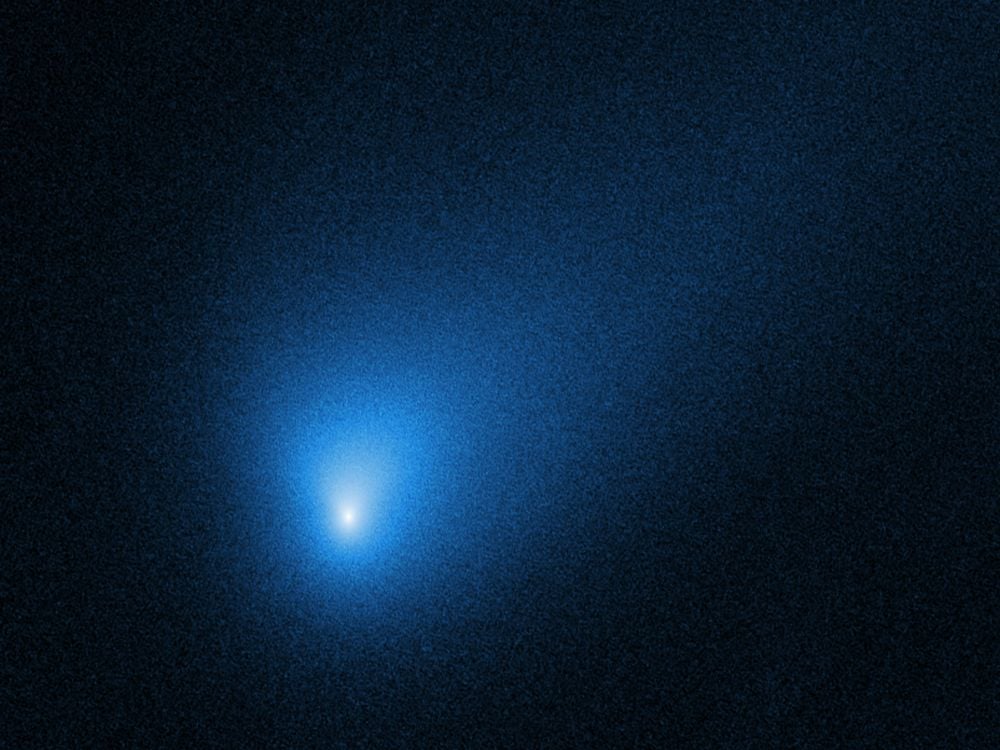
"ISOs present a unique opportunity to study the building blocks of other planetary systems," the authors explain. Scientists think that during a solar system's planet-forming process, a large number of icy bodies are ejected from the system. Planet formation isn't an orderly process, and planets can migrate closer to and further from their star(s) until things settle into a stable pattern. Those migrations can send icy bodies on trajectories that carry them out of their home system. This could be the source of interstellar comets like 2I/Borisov and 3I/ATLAS.
The galaxy could be littered with interstellar comets and we just haven't been able to detect them until very recently. "Their properties can give clues as to how planets formed elsewhere in the same way that comets record the process in our own Solar System, and models suggest that the composition of ISOs should vary with source region across the galaxy." the authors explain.
There have been proposals for missions to chase known ISOs, but these are impractical according to the authors. They involve untested maneuvers and propulsion systems. It's also not clear how these proposed missions would operate if they reached their targets, and how they would communicate with Earth, since they would be 100 au or more from Earth when they reached their target.
For the authors, the solution is clear. Any realistic attempt to rendezvous with an interstellar comet would need a mission waiting in space, just like the ESA's Comet Interceptor (CI) Mission.
"A realistic ISO mission will need to encounter its target during the brief time it is in the inner Solar System, which implies having a spacecraft ready, developed in advance of the discovery of the ISO," they write.
The ESA's CI mission is designed to be relatively inexpensive and to be launched alongside another, larger payload. That could work for an interstellar comet, too, and the remaining issue concerns instrumentation. But the interstellar comet mission would carry pretty much the same payload as the CI mission. "A capable remote sensing payload is also essential: resolved imaging will reveal the bulk structure and geomorphology of the nucleus, including evidence for or against craters, layering, and/or substantial surface processing by cometary activity, all of which are critical to understanding the ISO’s birth environment around another star, the authors explain.
There's one exception though. "In terms of payload, owing to the unusual neutral composition that may differ significantly from other Solar System comets, a neutral mass spectrometer is a crucial instrument," the researchers write.
There's a slim chance that the CI launched in 2029 could be employed to visit an interstellar comet. But the detection of the object and its close approach would have to be just right. The authors say this is extremely unlikely. They do say that the low-cost CI mission could be a blueprint for a mission to an interstellar comet.
"There is strong scientific and public interest in an ISO mission, and we believe that CI can act as a proof of concept for the ‘wait in space’ approach for such a mission, while achieving its own Solar System exploration goals," the authors explain.
Any wait in space mission to an interstellar comet will almost certainly wait until scientists understand the population better. The Vera Rubin Observatory and its Legacy Survey of Space and Time is poised to begin operations, and it is projected to detect at least 10 ISOs. The number could be much higher; nobody knows for sure. Its data "... will place strong constraints on the true population size and therefore likely waiting time to find a reachable one; a necessary step to make a convincing case for a mission," the authors write.
The authors say that a mission to an interstellar comet should be a high priority, and it's hard to argue with them. Think what could be learned.
It's highly unlikely that humanity will ever visit another Solar System, though nobody can say for sure. Our only hope of getting close to anything outside of our system, and gathering a sample, may be in a CI-type mission.
The study of comets in our Solar System has revealed some surprises. Rosetta found the amino acid glycine on comet 67P/Churyumov–Gerasimenko. It also found other complex organic molecules, and phosphorous, a key part of DNA. These results hinted at how the ingredients for life may be widespread, and that life may be primed to originate on any suitable world.
What if we find amnio acids and other of life's building blocks on a comet from another solar system? That's an enticing proposition that would expand our thinking about life elsewhere in the Milky Way. If the authors are correct, an opportunity to detect them on an interstellar comet may not be far off.